
Pets depend on people for safe food, preventive health care, exercise, and a suitable home. Common pet-care mistakes—such as feeding an inappropriate diet, skipping veterinary visits, or overlooking behavior and environmental needs—can contribute to preventable illness and distress. The American Veterinary Medical Association (AVMA) recommends regular veterinary care tailored to an animal’s age and health, while the Association for Pet Obesity Prevention has reported that excess weight is widespread among U.S. pets. Avoiding these mistakes starts with species-appropriate care, routine prevention, thoughtful feeding, and attention to signs that an animal needs help.
Preventive health care mistakes and safer routines
Preventive pet care is the ongoing combination of veterinary examinations, vaccinations, parasite control, dental care, and observation that helps protect an animal before a problem becomes severe. The AVMA advises owners to work with a veterinarian to determine care based on species, age, lifestyle, and health rather than relying on a one-size-fits-all schedule. A useful routine includes recording treatments, monitoring changes, and contacting a clinic when symptoms appear.
Mistake: skipping routine veterinary visits
A wellness examination can identify subtle changes in weight, teeth, skin, mobility, or heart and lung function that may not be obvious at home. Waiting until an animal appears seriously ill can delay diagnosis. The right appointment frequency varies: puppies and kittens need a series of early visits, while adult and senior pets may need different schedules according to their medical history. Ask the veterinarian to recommend an individualized plan and keep a record of examinations and test results.
Mistake: missing vaccinations and parasite prevention
Vaccination and parasite prevention reduce risks from infectious diseases, fleas, ticks, heartworms, and intestinal parasites. The American Animal Hospital Association and the American Association of Feline Practitioners distinguish core vaccines from those chosen according to an animal’s exposure and local risks. Do not assume an indoor lifestyle eliminates risk or use a product intended for another species: some dog flea treatments containing permethrin, for example, can be highly toxic to cats. Have a veterinarian select products and timing for each pet.
Mistake: overlooking dental health
Dental disease can cause pain, difficulty eating, and inflammation, yet pets may continue eating despite discomfort. The AVMA recommends regular checks of the mouth and professional dental care when indicated. Home tooth-brushing with pet-safe toothpaste can help, but human toothpaste is not suitable for pets. Seek veterinary advice for bad breath, bleeding gums, broken teeth, drooling, or a sudden reluctance to chew.
These preventive steps are most effective when paired with everyday choices about food, treats, and activity, since weight and diet influence long-term health.
Feeding and weight-management mistakes
Pet nutrition is the provision of a complete and balanced diet in an appropriate amount for an animal’s species and life stage. The U.S. Food and Drug Administration explains that “complete and balanced” pet foods meet established nutrient profiles or pass feeding trials. Labels, feeding directions, and veterinary guidance can help owners choose and portion food; a product’s marketing language alone does not establish that it suits a particular pet.
Mistake: choosing food without checking its nutritional adequacy
Pets have different nutritional requirements: cats are obligate carnivores, while dogs can use a wider range of ingredients in a balanced diet. Choose food labeled for the correct species and life stage, and consult a veterinarian before changing diets for a medical condition. Homemade diets can be deficient or excessive in essential nutrients if not formulated by a veterinary nutrition specialist. Avoid raw diets unless you have discussed the risks: the U.S. Centers for Disease Control and Prevention warns that raw pet food can carry germs such as Salmonella and Listeria that may affect pets and people.
Mistake: overfeeding and treating too freely
Overfeeding can lead to excess body fat and make movement and daily activity more difficult. The Association for Pet Obesity Prevention’s 2022 survey estimated that 59% of dogs and 61% of cats in the United States were overweight or obese. These figures are estimates from a survey, not a count of every U.S. pet, but they highlight how common the problem can be. Measure meals, account for treats in the daily intake, and ask a veterinarian to assess body condition rather than judging weight by appearance alone.
Mistake: sharing unsafe foods
Some foods safe for people can poison pets. The ASPCA Animal Poison Control Center identifies chocolate, grapes and raisins, onions and garlic, and products containing the sweetener xylitol among hazards for pets. Keep risky foods and medications out of reach, and contact a veterinarian or animal poison-control service promptly if an animal may have eaten something toxic. Do not induce vomiting unless a veterinary professional instructs you to do so.
Appropriate meals support health, but pets also need daily opportunities to move, explore, rest, and behave naturally in a safe environment.
Exercise, enrichment, and home-safety mistakes
Enrichment means providing safe physical activity and mental challenges that fit an animal’s species, age, and temperament. Dogs may benefit from walks, play, and reward-based training; cats often benefit from climbing spaces, scratching surfaces, and interactive play. The needs of individual animals vary, so adjust activities for health, weather, and ability rather than applying a fixed routine to every pet.
Mistake: assuming a pet will exercise itself
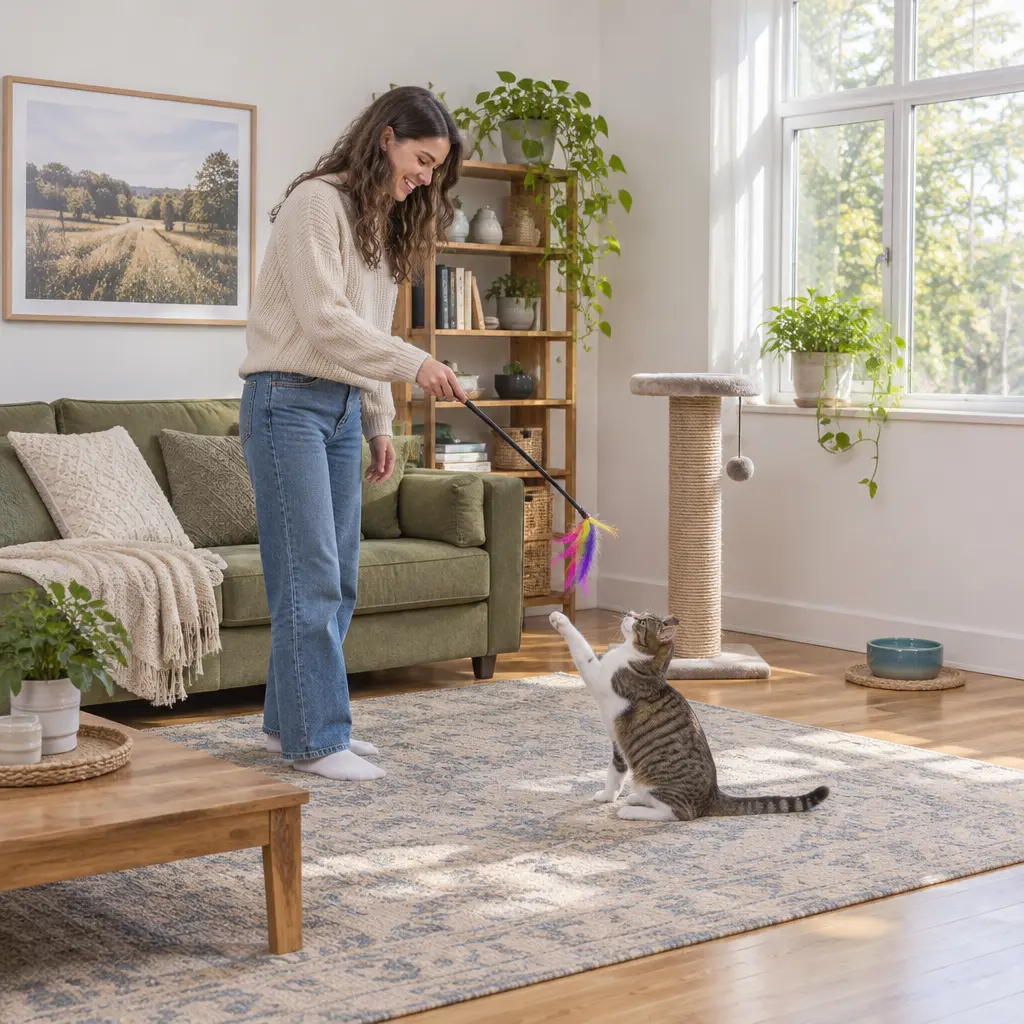
Limited activity can contribute to weight gain, boredom, and unwanted behaviors. Provide regular, supervised opportunities for movement and play, increasing activity gradually for an inactive or older pet. For cats, short play sessions with toys that imitate chasing can encourage movement; for dogs, sniffing walks and simple training games offer mental as well as physical engagement. Stop and seek veterinary advice if exercise causes unusual coughing, weakness, limping, or distress.
Mistake: leaving hazards accessible
A pet-safe home reduces access to substances and objects that can cause poisoning, burns, choking, or injury. Secure medications, cleaning products, pesticides, cords, small toys, and toxic plants; supervise pets around open windows, balconies, pools, and unfamiliar animals. The ASPCA lists lilies as especially dangerous to cats, with exposure potentially causing severe kidney injury. Check plant names before bringing greenery indoors and contact a veterinarian immediately after suspected exposure.
Mistake: neglecting identification and emergency preparation
A collar with current contact information and a registered microchip improve the chance of reuniting with a lost pet. The American Veterinary Medical Association advises keeping microchip registration details current; a chip is not a GPS tracker and must be scanned by a shelter or veterinary clinic. Prepare a basic emergency kit with food, water, medications, veterinary records, and a carrier or leash, and identify a clinic that can provide urgent care.
A safe, engaging environment also depends on understanding behavior. Punishing communication or treating distress as misbehavior can worsen problems instead of resolving their causes.
Behavior and communication mistakes
Pet behavior is shaped by health, learning, environment, and species-specific communication. A change such as hiding, house-soiling, aggression, or loss of interest in play may reflect fear, stress, pain, or illness. The American Veterinary Society of Animal Behavior supports reward-based training and advises against methods that rely on fear or pain. When behavior changes suddenly, rule out medical causes with a veterinarian before treating it as a training issue.
Mistake: using punishment or inconsistent training
Reward-based training reinforces behaviors an owner wants to see, such as coming when called or settling on a mat. Punishment can make an animal fearful and may suppress warning signals without addressing the underlying cause. Use consistent cues, reward progress, and set up the environment to prevent repeated mistakes. For severe fear, reactivity, or aggression, seek help from a qualified behavior professional working with a veterinarian.
Mistake: ignoring body language and stress
Animals communicate through posture, movement, facial expression, and vocalization. A dog turning away, freezing, or repeatedly licking its lips may be uncomfortable; a cat with flattened ears, a tucked posture, or a lashing tail may need space. Signals are context-dependent, so avoid assuming that a wagging tail always means a dog welcomes contact. Give pets a retreat, supervise interactions with children, and allow an animal to approach rather than forcing handling.
Mistake: treating behavioral change as “just aging”
New vocalizing, disorientation, accidents, irritability, or reduced activity can accompany pain, sensory loss, or other illness. Older pets may need environmental adjustments—such as nonslip flooring, accessible resting places, and easier access to food and litter—but these changes should not replace an examination. Record when a behavior began, how often it happens, and what appears to trigger it; those details help a veterinarian evaluate the problem.
Conclusion: build care around the individual pet
Avoiding common pet-care mistakes means arranging preventive veterinary care, feeding a suitable measured diet, providing exercise and enrichment, securing household hazards, and responding thoughtfully to behavior. No single schedule or food suits every animal, so use a veterinarian’s guidance to adapt care to species, age, health, and lifestyle. Review your pet’s records, check food and medication storage, update identification, and schedule a wellness visit if one is overdue. Small, consistent improvements can protect well-being and help pets live safer, healthier lives.
Sources: American Veterinary Medical Association, Veterinary Care, https://www.avma.org/resources-tools/pet-owners/petcare/veterinary-care; American Animal Hospital Association, 2022 AAHA Canine Vaccination Guidelines, https://www.aaha.org/resources/2022-aaha-canine-vaccination-guidelines/; American Association of Feline Practitioners, Feline Vaccination Advisory Panel Report, https://catvets.com/guidelines/practice-guidelines/feline-vaccination-guidelines/; U.S. Food and Drug Administration, Complete and Balanced Pet Food, https://www.fda.gov/animal-veterinary/animal-health-literacy/complete-and-balanced-pet-food; U.S. Centers for Disease Control and Prevention, Pet Food Safety, https://www.cdc.gov/healthy-pets/about/pet-food-safety.html; Association for Pet Obesity Prevention, 2022 Pet Obesity Prevalence Survey, https://www.petobesityprevention.org/2022; ASPCA Animal Poison Control Center, People Foods to Avoid Feeding Your Pets, https://www.aspca.org/pet-care/animal-poison-control/people-foods-avoid-feeding-your-pets; ASPCA, Toxic and Non-Toxic Plants, https://www.aspca.org/pet-care/animal-poison-control/toxic-and-non-toxic-plants; American Veterinary Society of Animal Behavior, Humane Dog Training Position Statement, https://avsab.org/resources/position-statements/; American Veterinary Medical Association, Microchipping of Animals, https://www.avma.org/resources-tools/pet-owners/petcare/microchipping-animals