
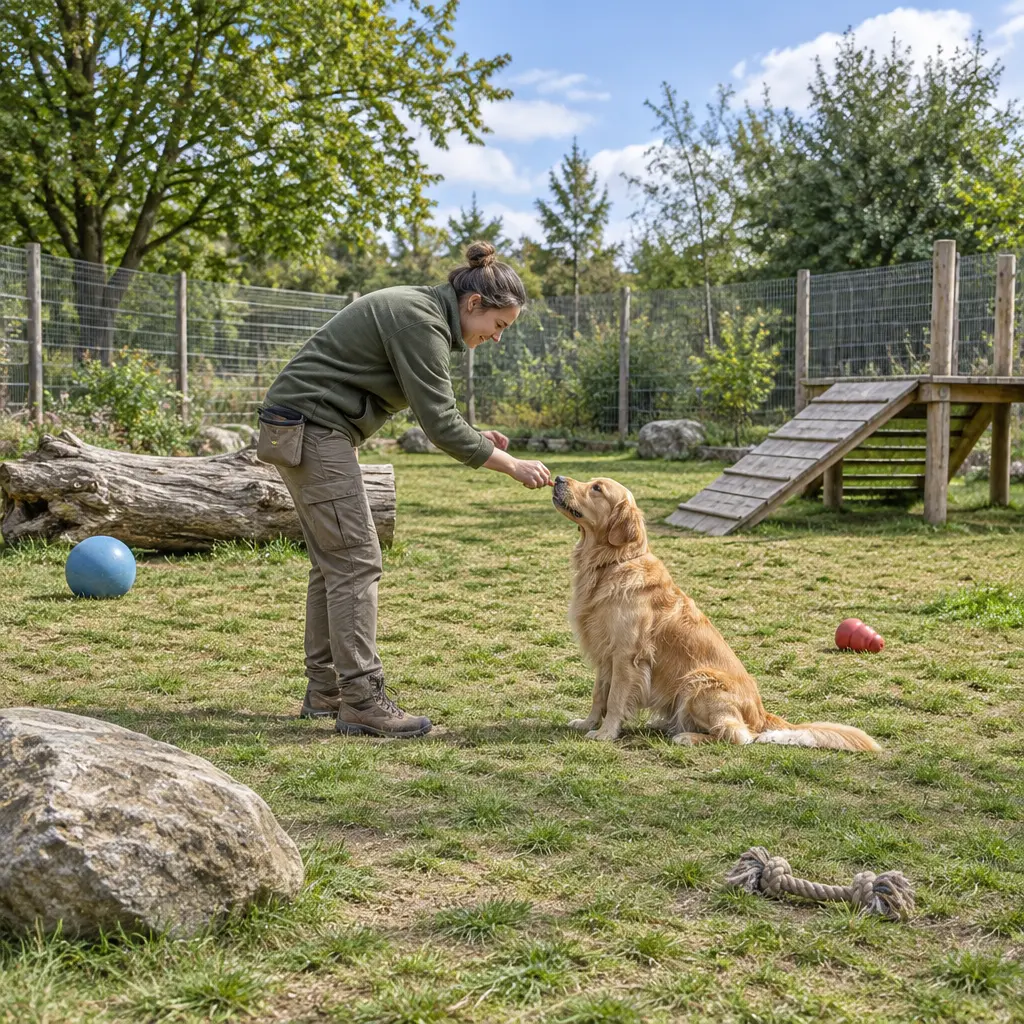
Stress in animals is a set of physical and behavioral responses to challenges that threaten or appear to threaten an animal’s ability to cope. Short-term stress can help an animal respond to danger, but persistent or intense stress may impair health, behavior, and welfare. Causes include pain, illness, fear, confinement, social conflict, and unpredictable surroundings; reducing stress means identifying the cause and improving care, environment, handling, and veterinary support. The World Organisation for Animal Health (WOAH) places freedom from fear and distress among the internationally recognized principles of animal welfare, while research on stress physiology explains why early detection and prevention matter.
Stress describes animals’ responses to challenge
Animal stress is not a single emotion or diagnosis. It is a coordinated response involving the nervous, endocrine, immune, and behavioral systems. The National Research Council’s report Stress and Welfare in Animals describes stress in terms of an animal’s biological response when demands challenge its capacity to adapt. The trigger may be real or perceived, and the response differs with species, individual history, health, and circumstances.
A brief response can be adaptive: an animal may freeze, flee, or become more alert when danger is near. The concern is distress that is severe, repeated, or prolonged, especially when the animal cannot escape or recover. Stress should therefore be assessed through context and patterns of signs rather than inferred from one behavior alone.
Acute stress and chronic stress
Acute stress is a short-lived response to an immediate challenge, such as a sudden noise, veterinary examination, or encounter with a predator. The hypothalamic-pituitary-adrenal axis helps regulate this response, including the release of glucocorticoid hormones such as cortisol in many species. Once the challenge ends, a healthy animal generally returns toward its usual state.
Chronic stress occurs when challenges persist, recur without sufficient recovery, or exceed an animal’s coping capacity. The National Research Council notes that prolonged stress can affect biological function and welfare. However, cortisol is not a stand-alone stress meter: levels vary by species, time of day, sampling method, and the event itself, so measurements need careful interpretation alongside behavior and health.
Distress, coping, and individual differences
Distress refers to a negative state in which an animal’s coping responses are insufficient or costly. Animals may respond differently to the same conditions: one may hide, another may vocalize, and another may become unusually inactive. Age, temperament, past experience, illness, and the availability of safe choices can all influence the response.
Common causes of stress in animals
Stress can arise from physical discomfort, fear, social relationships, or environmental conditions. These causes often overlap: for example, a crowded enclosure may prevent an animal from avoiding an aggressive companion or reaching food and water. Looking for the source—not just the visible behavior—is essential to choosing an effective response.
Pain, illness, and unmet physical needs
Pain, injury, disease, hunger, thirst, temperature extremes, and lack of rest can create or intensify stress. Signs may include reduced appetite, altered posture, limping, changes in grooming, withdrawal, or sudden irritability. Because these signs can also indicate medical problems, a veterinarian should assess significant, persistent, or unexplained changes rather than assuming they are simply behavioral.
Fear, handling, and unfamiliar events
Restraint, transport, loud noises, unfamiliar people, and forced contact can be stressful, particularly when an animal has no predictable way to retreat. The American Veterinary Medical Association supports low-stress handling approaches that reduce fear and avoid unnecessary force. Gradual acclimation, calm movement, appropriate equipment, and rewarding voluntary cooperation can make routine care less threatening.
Social conflict and isolation
Social needs vary: some species benefit from stable groups, while others are territorial or need carefully managed contact. Bullying, competition for food or resting places, separation from bonded companions, and unsuitable isolation can all be stressors. The right approach is species-specific; simply adding more animals or separating them without considering social needs may worsen welfare.
Confinement and environmental unpredictability
An enclosure can be stressful if it lacks space, shelter, suitable flooring, hiding areas, enrichment, or opportunities to perform important natural behaviors. Frequent changes, inconsistent routines, and poor control over light, noise, or temperature may add further strain. WOAH’s animal-welfare framework emphasizes that welfare includes physical and mental states and is influenced by the conditions in which animals live and die.
Signs that an animal may be stressed
Stress signs are clues, not definitive diagnoses. A reliable assessment compares an animal with its normal behavior and considers when, where, and how often a change occurs. The RSPCA advises looking for combinations of behavioral and physical signs and consulting a veterinary professional when concerns persist.
Behavioral changes
Possible signs include hiding, repeated pacing, escape attempts, unusual aggression, excessive vocalization, reduced play or exploration, and repetitive behaviors. Some animals become more active; others become quiet or withdrawn. A behavior that is normal in one context may indicate a problem when it is new, unusually frequent, or paired with other changes.
Physical and routine changes
Changes in eating, drinking, sleep, elimination, grooming, body condition, or social interaction can signal stress or illness. In farm animals, for example, altered feeding, reduced production, injuries, or increased disease may prompt a welfare review, but none alone proves stress. A simple observation log can help identify patterns and provide useful information to a veterinarian or animal-care professional.
How to reduce stress in animals
Stress reduction begins with prevention and a search for the underlying cause. Improving one part of care may not be enough if pain, fear, social conflict, or environmental limits remain. The following steps can be adapted to pets, wildlife under professional care, and managed farm or laboratory settings.
Provide a suitable, predictable environment
Meet species-specific needs for space, shelter, temperature, clean water, nutrition, rest, and appropriate social contact. Offer safe hiding or retreat areas where suitable, and provide enrichment that encourages natural behaviors such as foraging, exploration, or play. Keep routines reasonably predictable while introducing necessary changes gradually.
Use gentle handling and gradual training
Approach calmly, avoid chasing or cornering, and allow the animal time to become familiar with people, equipment, and procedures. Reward-based training can build cooperation for tasks such as entering a carrier or accepting examination. If an animal shows escalating fear, pause when safe and reassess the method rather than increasing force.
Protect health and address pain promptly
Arrange veterinary assessment for persistent behavior changes, signs of pain, appetite loss, injury, or sudden fearfulness. Treating a medical problem may resolve apparent behavioral stress, while behavior-focused changes may be needed alongside treatment. Do not give human medication or sedatives unless specifically directed by a veterinarian.
Review social arrangements and monitor outcomes
Observe interactions and ensure animals can access food, water, shelter, and resting places without intimidation. Where separation or introductions are necessary, use a gradual, species-appropriate plan and seek expert guidance for complex cases. After making changes, track behavior and health over time; improvement or deterioration helps determine whether the intervention is working.
Conclusion: preventing animal stress supports welfare
Stress in animals is a biological and behavioral response to challenges, ranging from brief adaptive alertness to persistent distress. Pain, fear, handling, social conflict, confinement, and unpredictable surroundings are important causes; changes in behavior, appetite, health, and routine can provide warning signs. The most effective response combines appropriate environments, gentle handling, species-aware social care, and timely veterinary attention.
Animal caregivers can take action by learning normal behavior for the species in their care, recording changes, and addressing likely causes early. For ongoing or severe concerns, consult a veterinarian or qualified animal-welfare professional. Prevention benefits animals and helps people provide safer, more effective care.
Sources: National Research Council, Stress and Welfare in Animals: Challenges and Opportunities for Research, 2008, https://doi.org/10.17226/11911; World Organisation for Animal Health, Terrestrial Animal Health Code, Chapter 7.1: Introduction to the Recommendations for Animal Welfare, https://www.woah.org/en/what-we-do/standards/codes-and-manuals/terrestrial-code-online-access/; American Veterinary Medical Association, Animal Welfare: What Is Animal Welfare and Why Is It Important?, https://www.avma.org/resources-tools/animal-health-and-welfare/animal-welfare; RSPCA, How to Recognise Signs of Stress in Animals, https://www.rspca.org.uk/adviceandwelfare/pets/general/stress; Mellor, D. J. et al., The 2020 Five Domains Model: Including Human–Animal Interactions in Assessments of Animal Welfare, Animals, 2020, https://doi.org/10.3390/ani10101870.