
Compassionate Parenting and Animal Welfare: Teaching Children Kindness at Home
Compassion toward animals is the habit of noticing an animal’s needs and responding with care, respect, and appropriate boundaries. At home, families can teach it through adult role modeling, safe and supervised contact, age-appropriate pet care, and conversations about animals’ feelings and needs. These practices matter for animals’ welfare and help children learn empathy and responsibility. Research supports the value of humane education, while also underscoring that children’s safety and animals’ comfort must come first.
Teaching Compassion Toward Animals Through Everyday Family Practices
The American Veterinary Medical Association (AVMA) describes animal welfare in terms of an animal’s physical and mental state and the conditions in which it lives. Applied at home, compassion means more than being affectionate: children learn to recognize that animals are living beings with needs, preferences, and limits. Families can put this idea into practice through gentle handling, reliable care, observation, and respect for an animal’s choice to move away.
The topic is relevant in households with pets and in everyday encounters with wildlife and community animals. The Centers for Disease Control and Prevention (CDC) advises adults to supervise children around animals and teaches children not to approach, chase, or disturb unfamiliar animals. This guidance reflects an essential principle: kindness includes protecting both the child and the animal from stressful or unsafe interactions.
Empathy and perspective-taking
Empathy is the ability to notice and consider another being’s experience. Parents can help children practice it by asking questions such as, “What might the dog be telling us?” or “Does the cat seem comfortable?” A child might learn that a tucked tail, retreating posture, or attempt to hide can signal a wish for space, while an animal’s behavior should be interpreted cautiously rather than treated as a certain statement of emotion.
In a 2015 review published in the journal Social Development, researchers Kristina H. Hawkins and colleagues examined links between children’s relationships with animals and social-emotional development. The authors noted potential benefits, including opportunities to practice empathy, while emphasizing that results vary and that much of the evidence is correlational. A pet is not a guaranteed route to empathy; adult guidance helps children turn interactions into thoughtful learning.
Respectful boundaries and safe contact
Respectful contact means letting an animal approach, avoiding rough handling, and stopping when the animal shows signs of discomfort. Children should not hug, ride, corner, or disturb a sleeping or eating animal unless a responsible adult and the animal’s caregiver have established that contact is safe. Families can teach a simple routine: ask the owner, wait for permission, approach calmly, offer a hand only when appropriate, and stop if the animal moves away.
The CDC advises that children should never be left unsupervised with dogs, even familiar ones. This precaution is important because a child may misread an animal’s signals, and even a normally gentle animal can react defensively when frightened, hurt, or startled. Close supervision is not a substitute for teaching boundaries; it supports them.
Building Compassion Toward Animals Through Care, Learning, and Service
Once children understand that animals have needs and boundaries, families can extend the lesson into daily care and community awareness. Compassion takes several forms: practical care for a household pet, humane learning about animals, and responsible action that protects animals without putting children at risk.
Age-appropriate pet care and responsibility
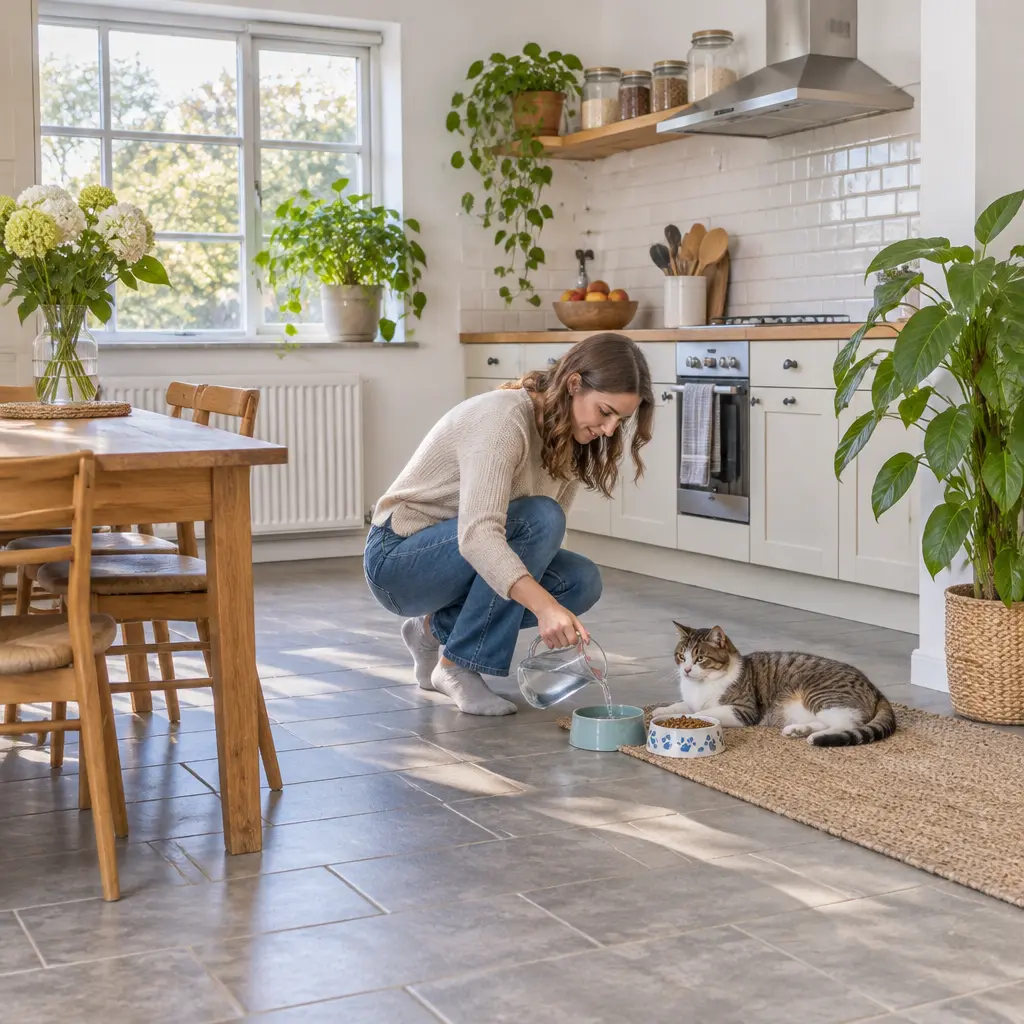
Pet care is the routine provision of food, clean water, suitable shelter, exercise, veterinary attention, and social interaction. Children can participate in simple tasks, but an adult must remain accountable for the animal’s welfare. Young children might help refill a water bowl with supervision or gather grooming supplies; older children may follow a checklist for feeding or cleaning, with an adult verifying that the job is done correctly.
The AVMA’s guidance on responsible pet ownership stresses meeting an animal’s needs throughout its life. That commitment can be a useful family discussion: adopting an animal is not a short-term gift or a child’s job alone. Before bringing a pet home, adults should consider the animal’s species-specific needs, household capacity, costs, and who will provide care when routines change.
Humane education and learning from nature
Humane education teaches people to understand animals, consider their welfare, and make choices that reduce harm. At home, it can include reading age-appropriate books, watching wildlife quietly, discussing how different species meet their needs, or visiting a reputable animal shelter or educational program. The goal is not to encourage children to touch every animal, but to help them observe thoughtfully and understand that wild animals usually need distance and habitat protection.
Families can make observation a small learning exercise: notice where an animal finds food, how it avoids danger, and what signs indicate that people are disturbing it. The National Park Service’s wildlife-viewing guidance recommends keeping a safe distance and not feeding wildlife. These practices protect animals from stress and dependence on human food while teaching children that care sometimes means leaving an animal undisturbed.
Helping animals through safe, adult-led action
Service is a practical way to express compassion, provided it is suitable for the child’s age and the animal’s needs. Families might donate unopened supplies to a local shelter, make enrichment items under staff guidance, or help an adult deliver food to an animal-welfare organization. Children should not approach injured wildlife or unfamiliar animals. An adult should contact a wildlife rehabilitator, animal control agency, or veterinarian for advice instead.
For example, a family whose child finds a fledgling bird can use the moment to explain that young birds are often cared for by nearby parents. Rather than picking it up automatically, the adult can assess the situation from a distance and seek expert advice if the bird appears injured or is in immediate danger. The lesson combines curiosity with restraint: helping does not always mean handling.
Strengthening Compassion Toward Animals With Consistent Adult Role Modeling
Children learn not only from instructions but from what adults repeatedly do. Speaking calmly about animals, following through on pet-care responsibilities, and respecting wildlife provide visible examples. If an adult responds to an animal with patience rather than teasing or punishment, the child sees how compassion can guide behavior even when an animal is inconvenient or difficult to understand.
Use calm language and specific feedback
Specific feedback helps children connect an action with its effect. Instead of saying only “Be nice,” an adult can say, “You stopped when the cat walked away; that gave her space.” If a child behaves roughly, intervene promptly and calmly, separate child and animal if needed, and show a safer alternative. Avoid presenting an animal as a toy or assuming that it enjoys contact simply because it does not immediately resist.
Make compassion a family routine
A short, repeatable routine can make humane habits easier to remember. Before interacting with a pet, children can check whether the animal is resting, eating, or choosing to approach; during contact, they can use gentle hands; afterward, they can wash their hands and leave the animal to rest. The CDC recommends handwashing after contact with animals, their food, or their environments, a simple health practice that also reinforces responsible care.
Families can also use a weekly conversation to review what the animal needs and whether the household is meeting those needs. A child might notice that a pet’s water bowl is empty or that the animal seeks a quiet place. Adults should treat these observations as invitations to learn, not as proof that the child is ready to take over essential care.
Conclusion: Compassion Toward Animals Begins at Home
Teaching compassion toward animals combines empathy, safe boundaries, age-appropriate care, humane education, and consistent adult example. Research suggests that relationships with animals can offer opportunities to develop social-emotional skills, but responsible supervision and careful interpretation are essential. Families can start with small actions: model gentle behavior, teach children to respect an animal’s signals, make care routines predictable, and observe wildlife without disturbing it. For further guidance, consult a veterinarian, local animal shelter, or public-health authority about practices suited to your household and community.
Sources: American Veterinary Medical Association, Animal Welfare, https://www.avma.org/resources-tools/avma-policies/animal-welfare; American Veterinary Medical Association, Pet Ownership and Care, https://www.avma.org/resources-tools/pet-owners; Centers for Disease Control and Prevention, Healthy Pets, Healthy People: Dogs, https://www.cdc.gov/healthy-pets/about/dogs.html; Centers for Disease Control and Prevention, Healthy Pets, Healthy People: Handwashing, https://www.cdc.gov/healthy-pets/about/handwashing.html; Hawkins, Kristina H., et al., “The Role of Pets in the Development of Children’s Social-Emotional Skills,” Social Development, 2015; National Park Service, Viewing Wildlife, https://www.nps.gov/subjects/watchingwildlife/index.htm.