
Conservation is the care and recovery of nature, including the habitats that sustain plants, animals, and people. If you are new to conservation, start by learning about a place—its species, water, soils, and pressures—rather than reacting only to alarming headlines. Habitat-focused action connects local observations to practical choices, from planting native vegetation to protecting wetlands. It also helps put global figures in context: the Intergovernmental Science-Policy Platform on Biodiversity and Ecosystem Services (IPBES) estimates that around one million animal and plant species face extinction, while the United Nations reports that forests cover about 31% of the world’s land area. Those broad measures matter, but understanding what is happening in a specific habitat is where useful stewardship begins.
Conservation begins with habitat condition
A habitat is the natural environment in which an organism lives, defined by resources and conditions such as food, water, shelter, climate, and space. The U.S. National Park Service describes habitat in terms of the resources an organism needs to survive and reproduce. Conservation, in turn, means protecting, managing, and restoring biodiversity and the ecological processes that support it. Together, “habitat-focused conservation” means identifying the needs and condition of a place, then choosing actions that address its particular ecological pressures.
This approach is useful because species do not exist in isolation. A stream, for example, can support aquatic insects, fish, riparian plants, birds, and nearby communities. Its condition depends on connected factors such as water quality, shade, flow, sediment, and barriers to movement. The U.S. Environmental Protection Agency’s National Rivers and Streams Assessment has documented widespread pressures on U.S. streams, including degraded biological condition and habitat disturbance. The exact findings vary by survey cycle and region, underscoring why local assessment is more informative than assuming every place faces the same problem.
Habitat condition: structure, resources, and ecological processes
Habitat condition describes how well a place supplies the resources organisms need and maintains the ecological processes that keep the system functioning. Useful indicators may include native plant cover, soil stability, water temperature, stream flow, nesting sites, or the presence of sensitive species. A single indicator rarely tells the whole story: a patch may look green while lacking native plants, or a stream may appear clear while still having altered flow or poor aquatic habitat.
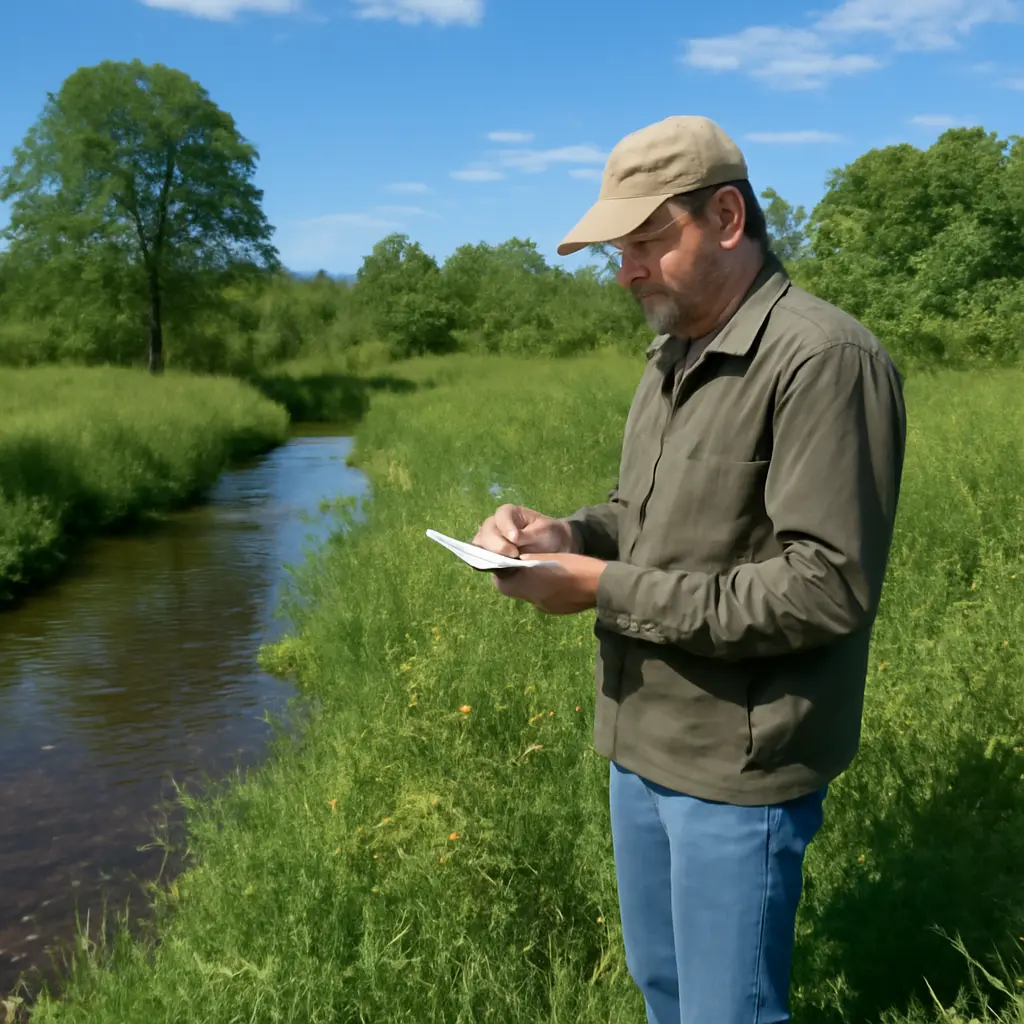
Start with simple, repeatable observations. Note what is present, what appears absent, and how the site changes across seasons. Record the date and location, and use the same observation method when returning. These notes can help distinguish a one-time sighting from a pattern and make community science more useful to land managers and researchers.
Habitat types: forests, wetlands, grasslands, and waterways
Habitat is a broad category with many forms, each shaped by its species, physical conditions, and ecological relationships. Forests provide layered vegetation and dead wood; wetlands hold water and support specialized plants and wildlife; grasslands depend on open conditions and disturbance patterns; and rivers and streams connect aquatic and terrestrial systems. These are examples of habitat hyponyms—more specific kinds within the broader habitat concept—not interchangeable conservation targets.
The Ramsar Convention defines wetlands broadly as areas of marsh, fen, peatland, or water, whether natural or artificial, permanent or temporary, with water that is static or flowing. Its global reporting has highlighted the importance of wetlands for biodiversity and people, while also documenting ongoing loss and degradation. In practice, the right response depends on the habitat: restoring wetland hydrology is different from reconnecting a forest corridor or managing invasive plants in a grassland.
Habitat threats guide conservation priorities
Once a habitat is identified, the next step is to understand what is changing it. The IPBES Global Assessment identifies five major direct drivers of biodiversity loss: changes in land and sea use, direct exploitation of organisms, climate change, pollution, and invasive alien species. Habitat degradation can result from several of these pressures at once—for example, roads may fragment a forest while runoff affects a nearby stream.
This is why conservation headlines should prompt questions rather than dictate a one-size-fits-all response. Ask which habitat is affected, what evidence supports the claim, what is driving the change, and which organization has relevant local expertise. A species decline may call for habitat restoration, but it may also require addressing hunting, disease, pollution, or another cause.
Habitat loss and fragmentation
Habitat loss occurs when natural or semi-natural areas are converted or rendered unsuitable for the organisms that depend on them. Fragmentation divides remaining habitat into smaller, separated patches. The United Nations Food and Agriculture Organization’s Global Forest Resources Assessment 2020 estimated that the world had lost about 178 million hectares of forest since 1990, although the pace of net forest loss has slowed over time. The figure illustrates the scale of change, but it does not replace local information about forest quality, species, or land-use history.
Fragmentation can isolate populations and make it harder for animals and plants to move, find mates, or adapt to changing conditions. Local conservation responses may include protecting intact patches, restoring links between them, or designing roads and development to reduce barriers. The best choice depends on the species’ movement needs and the landscape around the site.
Climate change, pollution, and invasive species
Climate change alters temperature, rainfall, fire patterns, sea level, and the timing of seasonal events. Pollution can affect water, air, and soil, while invasive species may compete with or prey on native organisms and change habitat structure. The IPBES assessment treats these as distinct but interacting drivers: a stressed habitat may be less resilient when several pressures occur together.
A practical assessment considers both the visible symptom and its source. If a pond has excess algae, for instance, the relevant questions include nutrient inputs, water circulation, and surrounding land use—not simply how to remove the algae. For invasive plants, early identification and guidance from local land managers can prevent well-intended removal efforts from spreading seeds or harming native species.
Habitat-focused conservation turns observation into action
After identifying a habitat and its pressures, conservation work can move from observation to a specific, measurable response. The International Union for Conservation of Nature’s Global Standard for Nature-based Solutions emphasizes addressing societal challenges while benefiting biodiversity and supporting human well-being. At a local scale, that principle means choosing interventions that fit the ecosystem, involve relevant communities, and can be monitored over time.
Protect intact habitat first
Protection prevents damage to habitat that is already functioning well. Depending on the setting, this can mean supporting conservation easements, respecting seasonal access restrictions, keeping pets under control, or helping a local land trust protect a high-value area. The Convention on Biological Diversity’s Kunming-Montreal Global Biodiversity Framework includes a target to conserve at least 30% of terrestrial, inland-water, coastal, and marine areas by 2030. Meeting area targets is meaningful only when conservation is effective, connected, and respectful of the rights and knowledge of Indigenous Peoples and local communities.
Restore degraded habitat with local guidance
Habitat restoration assists the recovery of an ecosystem that has been degraded, damaged, or destroyed. The Society for Ecological Restoration’s international standards describe restoration as a process guided by ecological reference information and measurable recovery goals. In a neighborhood, restoration may involve planting locally appropriate native species, reconnecting a stream to its floodplain, removing an identified barrier, or reducing erosion.
Restoration is not simply planting trees or making a site look tidy. A project should define the habitat it aims to recover, choose suitable species and methods, and monitor results. For example, planting trees in a naturally open grassland can damage rather than improve habitat. Advice from local conservation agencies, Indigenous knowledge holders, native-plant groups, or qualified ecologists can help avoid such mismatches.
Monitor results and learn from local examples
Monitoring is the repeated collection of observations or measurements to determine whether a conservation action is working. A simple project might track native plant survival, invasive-species cover, water clarity, or wildlife detections at fixed points over several seasons. Consistent methods make it easier to distinguish meaningful change from natural variation.
The Chesapeake Bay Program offers a large-scale example of habitat-based coordination: federal, state, and local partners track indicators and undertake work across a watershed that includes rivers, forests, wetlands, and the Bay itself. Its reporting shows why conservation often requires action across connected habitats and jurisdictions. For a beginner, the useful lesson is not to copy a watershed program at home, but to find a local effort with clear goals, transparent monitoring, and opportunities for participation.
How to begin conservation in your community
A first conservation project does not need to be large. Begin with a nearby park, shoreline, garden, woodland, or stream, and learn who manages it. Local natural-history groups, land trusts, watershed organizations, Indigenous-led initiatives, and government agencies can provide site-specific information and guidance.
- Choose one nearby habitat and learn its native species and seasonal patterns.
- Identify the site’s owner or manager and check for existing plans or volunteer programs.
- Observe a few simple indicators consistently, such as native plant cover or litter along a stream edge.
- Ask what pressure is most important locally before choosing an intervention.
- Join a supervised project, and record what was done so results can be evaluated.
A useful visual for a community project is a simple habitat-condition chart showing repeated observations over time—for example, native plant cover before and after restoration. Such a chart should label its dates, methods, and sampling locations so readers can interpret the results responsibly.
Conclusion: let the habitat lead
Habitat-focused conservation starts with a clear understanding of place: what kind of habitat is present, how well it functions, and which pressures are affecting it. Recognizing habitat loss, fragmentation, climate impacts, pollution, and invasive species helps explain why conservation actions must be specific. Protection, restoration, and monitoring can then turn concern into practical work, guided by local expertise and evidence.
If you are new to conservation, choose one nearby habitat, learn its story, and connect with the people already caring for it. Small, well-informed actions are more useful than rushed interventions, and repeated community effort can contribute to broader biodiversity goals. For further learning, explore local habitat plans and the conservation resources published by IPBES, the U.S. National Park Service, and the Society for Ecological Restoration.
Sources: Intergovernmental Science-Policy Platform on Biodiversity and Ecosystem Services, Global Assessment Report on Biodiversity and Ecosystem Services, https://ipbes.net/global-assessment; United Nations, The Sustainable Development Goals Report 2024: Goal 15, https://unstats.un.org/sdgs/report/2024/Goal-15/; U.S. National Park Service, What Is a Habitat?, https://www.nps.gov/subjects/nnlandmarks/what-is-a-habitat.htm; U.S. Environmental Protection Agency, National Rivers and Streams Assessment, https://www.epa.gov/national-aquatic-resource-surveys/nrsa; Ramsar Convention on Wetlands, The Convention on Wetlands and Its Mission, https://www.ramsar.org/about/our-mission; Food and Agriculture Organization of the United Nations, Global Forest Resources Assessment 2020: Main Report, https://www.fao.org/3/ca9825en/ca9825en.pdf; Convention on Biological Diversity, Kunming-Montreal Global Biodiversity Framework, https://www.cbd.int/gbf; International Union for Conservation of Nature, Global Standard for Nature-based Solutions, https://www.iucn.org/our-work/nature-based-solutions; Society for Ecological Restoration, International Principles and Standards for the Practice of Ecological Restoration, https://www.ser.org/page/Standards; Chesapeake Bay Program, Chesapeake Progress, https://www.chesapeakeprogress.com/.