
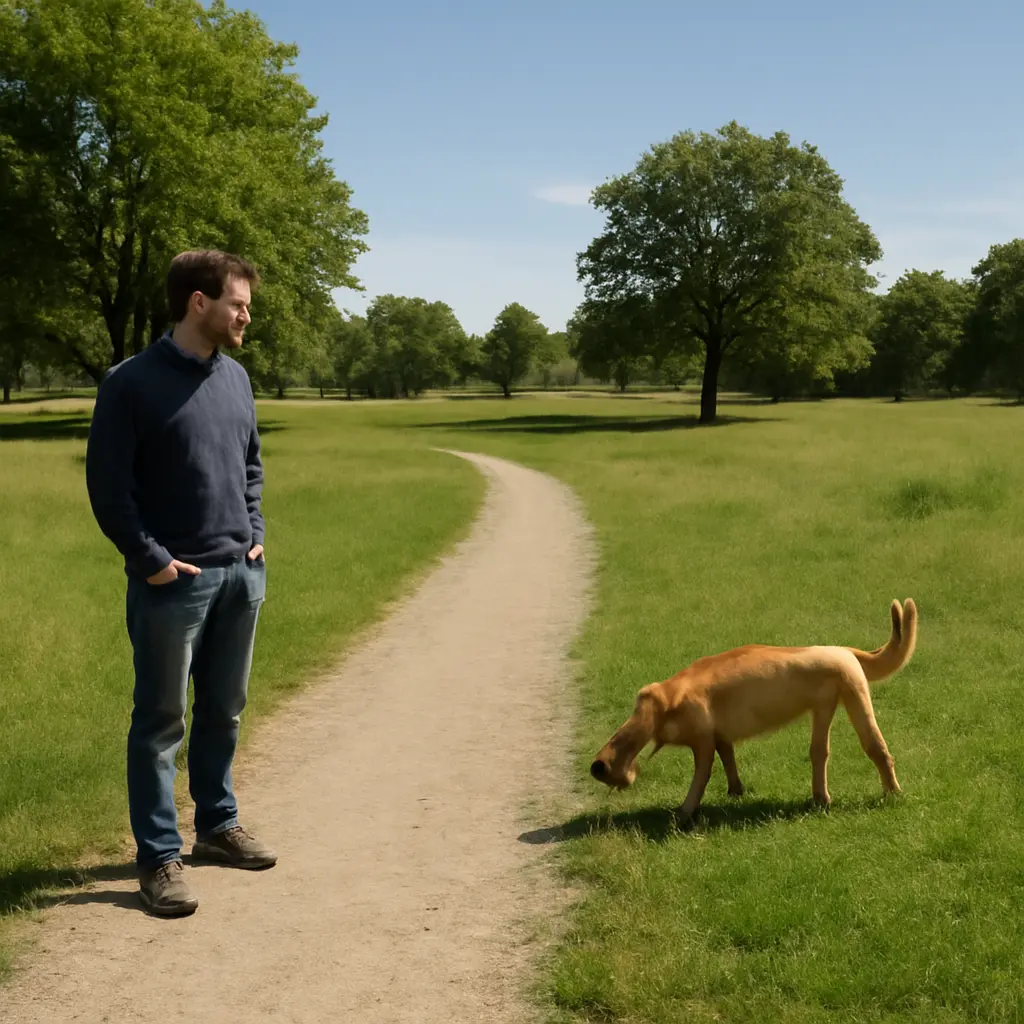
Dogs communicate through posture, movement, facial expression, vocalization, and changes in routine—but no single signal reliably tells you what a dog wants. The American Veterinary Society of Animal Behavior (AVSAB) describes behavior as shaped by both an animal’s environment and its learning history, so careful observation means noticing patterns and context rather than guessing from one gesture. Reading those patterns can help people recognize a request for play, a need for space, discomfort, or a possible health concern. This guide explains how to observe canine body language, distinguish common signals, track behavior over time, and respond safely, with research and professional guidance to support each step.
Dog communication: What observation can tell you
Dog communication is the exchange of information through behavior and sensory signals, including body posture, movement, facial expression, scent, and sound. Dogs cannot explain their needs in words, and people can misread their signals when they focus on one visible feature—such as a wagging tail—without considering the rest of the body or the situation.
The American Kennel Club’s Canine Health Foundation notes that tail movement should be interpreted alongside the dog’s overall posture and behavior. A wag can accompany excitement, uncertainty, or tension; it is not, by itself, proof that a dog welcomes interaction. The practical goal is not to translate every movement into a fixed phrase, but to build a picture from several signals and see whether the dog’s behavior changes when you respond.
Body language: Posture, face, and movement
Body language is the set of visible physical signals a dog uses in a particular context. Relaxed movement, a loose body, and a soft facial expression may be consistent with ease, while stiffness, a closed mouth, turning away, or attempts to create distance can indicate discomfort or conflict. These signs are clues, not diagnoses: their meaning depends on what happened just before, the dog’s normal behavior, and the signals that occur together.
The RSPCA advises people to watch the whole dog and give an animal the option to move away. That is especially important around children and unfamiliar dogs. If a dog turns its head, shifts away, or otherwise disengages, pausing an approach gives the dog space and gives the person more information than pressing closer would.
Vocal signals: Barking, whining, and growling
Vocal signals are sounds that may accompany a dog’s emotional state or attempt to affect what happens next. Barking, whining, and growling can have different functions in different circumstances; the sound alone does not establish whether a dog is playful, alarmed, frustrated, or fearful. Observe the dog’s posture, distance from the trigger, and what changes when the sound starts or stops.
A growl is useful information that the dog is uncomfortable or wants a situation to change. Punishing the warning can make the situation harder to assess because the underlying discomfort may remain even if the warning is suppressed. Instead, calmly increase distance, stop the interaction, and seek qualified help if the behavior recurs or creates a safety concern.
Context and routine: What happened before the signal?
Context is the surrounding situation that helps make a behavior understandable: location, people present, recent activity, available resources, and what happened immediately before the signal. A dog pacing at the door after a long stretch indoors may be signaling a different need from a dog pacing during a thunderstorm. The same behavior can have multiple explanations, so context helps narrow the possibilities without turning an interpretation into certainty.
A simple observation log can record the time, setting, behavior, likely trigger, and what happened next. Over several days, this may reveal a pattern—for example, barking that reliably begins when a delivery arrives, or restlessness that appears before a usual walk. If a behavior is new, intense, or associated with signs of illness or pain, consult a veterinarian rather than assuming it is merely a training issue.
Dog needs: Recognizing requests for activity, comfort, and space
A dog’s needs are the physical and behavioral conditions that support health and welfare, including food, water, rest, movement, social contact, and opportunities to engage in species-typical behavior. The American Veterinary Medical Association (AVMA) emphasizes responsible care and regular veterinary attention; observing behavior complements that care but does not replace an examination or professional assessment.
Needs often overlap. A dog asking to go outside may need a toilet break, exercise, or relief from something indoors; a dog seeking distance may be tired, overwhelmed, or uncomfortable. Respond by considering the immediate setting and offering a safe, low-pressure option. Then watch whether the dog settles, approaches, or continues to show concern.
Play and enrichment: Looking for willing participation
Play and enrichment are activities that give a dog opportunities for movement, exploration, problem-solving, and appropriate social interaction. A dog’s willingness to participate is more informative than a person’s assumption that the dog “should” want to play. Offer a suitable activity, keep it brief at first, and allow the dog to disengage without being coaxed or restrained.
The AVSAB’s humane dog-training position statement recommends reward-based methods and advises against techniques that rely on fear, intimidation, or pain. That principle applies when offering activities, too: make the experience safe and rewarding, and adapt it to the individual dog’s age, health, and preferences. If the dog turns away, repeatedly stops, or appears distressed, end the activity and reassess.
Rest, handling, and personal space
Rest and personal space are welfare needs that involve being able to relax and withdraw from interaction. A dog that moves away, hides, stiffens, or declines contact is communicating information worth respecting, even if the behavior seems inconvenient. Do not corner, grab, or reach into a resting place to force interaction; provide a quiet retreat where the dog can be left undisturbed.
The Centers for Disease Control and Prevention recommends supervising children around dogs and teaching them safe interactions. A practical household rule is to let a dog approach voluntarily and leave it alone when it is eating, sleeping, or retreating. These precautions protect both people and dogs while making the dog’s responses easier to interpret.
Pain, illness, and sudden behavior changes
A change in behavior can be a sign of pain, illness, age-related change, or a shift in the dog’s environment. Sudden irritability, reluctance to move, altered appetite, unusual withdrawal, or new sensitivity to touch deserves attention, particularly when it differs from the dog’s established pattern. Behavior alone cannot identify the cause.
The American Animal Hospital Association’s canine life-stage guidance stresses the value of preventive veterinary care across a dog’s life. Contact a veterinarian when behavior changes abruptly, persists, or appears alongside physical symptoms. A veterinary professional can check for medical causes and advise whether a qualified behavior specialist should also be involved.
Dog observation: A practical method for responding accurately
Dog observation is a repeatable process of noticing behavior, considering its context, trying a safe response, and checking what happens next. It is more reliable than assigning a human emotion or intention to one gesture. The approach also avoids treating breed, size, or a single past incident as a complete guide to an individual dog’s behavior.
The following sequence turns observation into a useful everyday practice:
- Pause and note the dog’s whole-body posture, movement, face, and vocalizations.
- Look at the setting and identify what happened immediately before the behavior.
- Consider several possible explanations rather than settling on the first one.
- Offer a safe choice, such as space, water, a toilet break, or an invitation to engage.
- Watch the result and record recurring patterns or concerning changes.
Use choice and distance as your first response
Choice means allowing a dog to approach, participate, or withdraw without pressure; distance means reducing exposure to a person, animal, or situation that appears concerning. These responses are useful because they reduce immediate pressure while revealing whether the dog becomes more comfortable. They are particularly important when a dog is stiff, avoiding contact, or giving other signs of unease.
For example, if a dog turns away when someone reaches to pet it, the person can stop reaching and step back. If the dog later approaches with relaxed movement, the person can offer interaction without looming over or restraining it. The dog’s response—not the person’s desire for contact—should guide what happens next.
Keep a behavior record and seek expert help when needed
A behavior record is a brief, consistent account of what the dog did, where it happened, what preceded it, and what followed. It can help a veterinarian or behavior professional distinguish a repeated trigger from a one-off event. Short video clips may also help, provided they are recorded without provoking or prolonging a stressful situation.
Seek veterinary advice for sudden or unexplained changes, and consult a qualified reward-based trainer or veterinary behavior professional for persistent fear, aggression, or distress. If a dog may bite, prioritize separation and safety rather than attempting to test or correct the behavior yourself. Professional support is more appropriate than relying on online interpretations when people or animals may be at risk.
Conclusion: Watch the pattern, respect the choice
Dog communication is made up of signals that gain meaning from context, while dog needs may involve activity, rest, comfort, health, or space. Careful observation brings those ideas together: notice the whole dog, consider what happened before, offer a safe choice, and check how the dog responds. Avoid treating a wag, bark, or other single signal as a definitive answer.
Start with one practical step today: keep a brief log of a behavior you want to understand, and note the setting and outcome without forcing an interaction. Respecting a dog’s signals can improve everyday care and reduce preventable conflict. For persistent or sudden changes, involve a veterinarian and, when appropriate, a qualified behavior professional.
Sources: American Veterinary Society of Animal Behavior, Humane Dog Training Position Statement, https://avsab.org/resources/position-statements/; American Veterinary Medical Association, Animal Welfare, https://www.avma.org/resources-tools/animal-health-and-welfare/animal-welfare; American Kennel Club Canine Health Foundation, Canine Body Language, https://www.akcchf.org/educational-resources/library/articles/canine-body-language.html; RSPCA, Dog body language, https://www.rspca.org.uk/adviceandwelfare/pets/dogs/behaviour/understanding/bodylanguage; Centers for Disease Control and Prevention, Dogs, https://www.cdc.gov/healthy-pets/about/dogs.html; American Animal Hospital Association, 2021 AAHA/AAFP Feline Life Stage Guidelines, https://www.aaha.org/resources/2021-aahaaafp-feline-life-stage-guidelines/.