
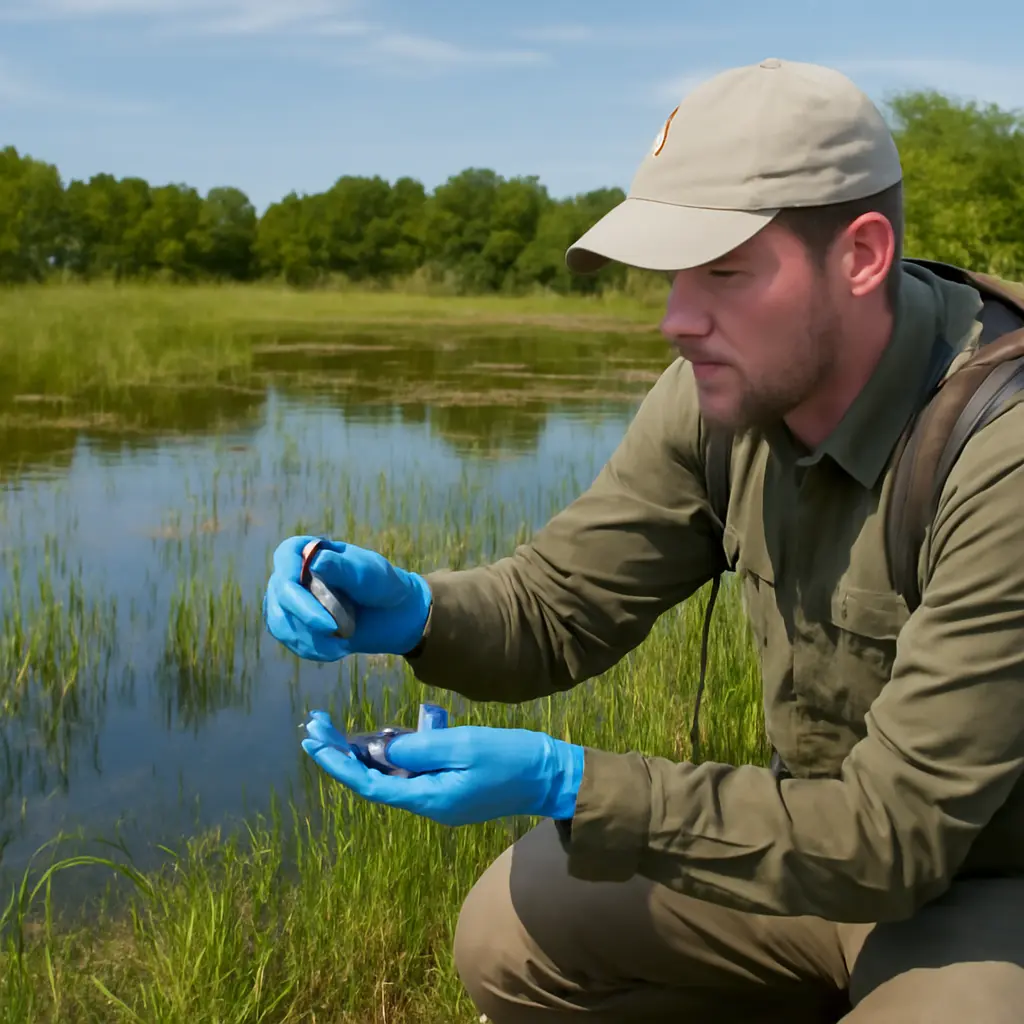
Amphibian disease spread is the movement of infectious pathogens among amphibians, populations, and habitats. Its conservation impact became unmistakable when the chytrid fungus Batrachochytrium dendrobatidis (Bd) and the related pathogen B. salamandrivorans (Bsal) drove severe declines and extinctions, changing amphibian conservation from a primarily habitat-focused effort into one that also depends on disease surveillance, biosecurity, and coordinated international action. A 2019 global assessment estimated that chytridiomycosis had contributed to declines in at least 501 amphibian species, including 90 presumed extinctions. The crisis shows why understanding transmission routes, identifying vulnerable species, and linking field research to practical prevention are now essential.
Disease spread changed amphibian conservation priorities
Amphibians include frogs, toads, salamanders, and caecilians. Their permeable skin and reliance on moist environments can make them especially sensitive to pathogens and environmental change. The International Union for Conservation of Nature (IUCN) defines chytridiomycosis as a disease caused by chytrid fungi; in amphibians, Bd and Bsal infect skin, disrupting vital functions such as water and electrolyte balance.
The scale of the crisis shifted conservation planning. In the 2019 study published in Science, researchers assessed 1,240 amphibian species for which Bd’s effects could be evaluated and attributed declines to the pathogen in at least 501 species. The study reported 90 presumed extinctions and found that many affected populations had not recovered. These findings do not mean disease is the only cause of amphibian decline: habitat loss, climate change, pollution, invasive species, and other pressures often compound its effects.
Disease therefore became both a conservation threat in its own right and a factor that changes how other threats are managed. Protecting habitat alone may not safeguard a population if an introduced pathogen can reach it; conversely, disease controls are unlikely to succeed if habitat quality is poor.
Pathogen transmission explains the conservation challenge
Transmission is the process by which a pathogen moves from an infected host or contaminated environment to another susceptible host. For amphibian chytrid fungi, spread can occur through contact between animals and through water or other contaminated materials. Researchers and conservation agencies also identify the movement of infected amphibians and contaminated equipment as risks that can carry pathogens between sites.
The distinction between a pathogen’s presence and its consequences matters. Some species can carry Bd without obvious illness, while other species suffer severe disease. Transmission risk, susceptibility, environmental conditions, and pathogen strain all influence whether infection leads to a population decline. This variation is why conservation assessments need to combine pathogen testing with population monitoring and ecological context.
Bd and chytridiomycosis
Batrachochytrium dendrobatidis is a water-associated chytrid fungus that infects keratinized amphibian skin. In susceptible animals, chytridiomycosis can interfere with the skin’s role in maintaining the body’s water and electrolyte balance and may cause lethargy, abnormal posture, or death. The 2019 global assessment identified Bd as a major contributor to amphibian declines across multiple regions and species groups.
Bd’s broad host range and ability to persist in aquatic environments complicate containment. The fungus has been detected across many parts of the world, but its effects are uneven: local climate, host species, pathogen lineages, and ecological conditions help determine disease severity. This makes local surveillance important even where the pathogen is already known to occur.
Bsal and salamander disease
Batrachochytrium salamandrivorans is a distinct chytrid fungus that causes lethal disease in many salamanders. It was described after a catastrophic decline in fire salamanders in the Netherlands. A 2013 study in Proceedings of the National Academy of Sciences documented the pathogen’s discovery and showed that it posed a serious risk to susceptible salamander species.
Bsal expanded the conservation concern beyond frogs and toads, prompting particular attention to the international trade and movement of salamanders. The United States Geological Survey and partner agencies have conducted risk assessments and surveillance because North America contains exceptional salamander diversity. Prevention is especially important where a pathogen has not yet become established: once it spreads into wildlife, eradication may be difficult or impossible.
Environmental and human-assisted transmission
Environmental transmission occurs when pathogens move through water or contaminated substrates; human-assisted transmission occurs when animals, water, footwear, nets, containers, or other equipment carry infectious material to new locations. The routes vary by pathogen and setting, so field protocols should be based on current guidance rather than assumptions that one disinfectant or procedure works for every organism.
The World Organisation for Animal Health (WOAH) and wildlife-health agencies emphasize biosecurity in animal handling and trade. For field teams, practical measures include cleaning and disinfecting equipment between sites, avoiding the transfer of water or biological material, and following approved procedures for handling animals. Such steps cannot eliminate every risk, but they reduce preventable movement of pathogens.
Disease surveillance reshaped amphibian conservation
Surveillance is the systematic collection and interpretation of data to detect pathogens, track infection, and assess changes in wildlife populations. Before chytridiomycosis became a global conservation concern, many amphibian programs concentrated mainly on habitat protection and population counts. Disease-related declines made pathogen testing and health monitoring necessary additions to that work.
Field sampling and diagnostic testing
Researchers commonly collect skin swabs and test them using molecular methods, including quantitative polymerase chain reaction (qPCR), which detects and estimates pathogen DNA. A positive test identifies pathogen material in a sample; it does not, by itself, prove that the animal is sick or that the pathogen caused a population decline. Strong assessments pair test results with observations of disease, repeated population surveys, and information about habitat and environmental conditions.
Sampling design affects what surveillance can reveal. Repeated surveys across seasons and sites can help distinguish a new introduction from long-standing low-level infection, while careful records of species, location, date, and handling procedures make results more useful for management. Standardized protocols also allow agencies and research groups to compare findings more reliably.
Early warning and data coordination
Early warning systems combine field observations, laboratory testing, and reporting networks to identify emerging disease before it spreads widely. The Amphibian Disease Portal, supported by the Amphibian Survival Alliance and partner organizations, provides a place to share information on amphibian disease and help connect research with conservation practice. Regional and national wildlife agencies also use surveillance to guide responses to suspected outbreaks.
A useful warning system must be transparent about uncertainty. Test sensitivity, sampling coverage, and uneven access to laboratories can affect whether a pathogen is detected. Sharing negative results and survey methods, as well as positive detections, helps decision-makers understand where evidence is strong and where monitoring remains incomplete.
Conservation responses now combine prevention and recovery
Disease-focused conservation uses a combination of biosecurity, trade controls, habitat management, captive care, and research. The appropriate response depends on whether the pathogen is absent, newly detected, or established, and on the vulnerability and conservation status of the affected species.
Biosecurity and trade measures
Biosecurity means practices intended to prevent the introduction or spread of infectious agents. Measures may include cleaning and disinfecting equipment, quarantining animals, testing shipments, and limiting the movement of potentially infected wildlife. In 2016, the United States restricted the importation and interstate transport of 201 salamander species to reduce the risk of Bsal introduction. The measure illustrates how disease evidence can change wildlife policy before a pathogen becomes established in a highly diverse region.
Trade controls work best alongside monitoring and enforceable procedures. Amphibians move through legal and illegal trade, and pathogens can also travel with contaminated materials. Conservation agencies therefore need coordination among wildlife authorities, researchers, traders, zoos, and the public.
Captive assurance and reintroduction
Captive assurance programs maintain individuals or breeding populations under managed conditions to reduce the risk of extinction in the wild. The Amphibian Ark, a partnership involving the IUCN Species Survival Commission, the World Association of Zoos and Aquariums, and other organizations, supports such programs for species threatened by immediate extinction risks, including disease.
Captive care is not a substitute for protecting wild habitat. It can preserve genetic diversity and provide animals for future reintroduction, but releases require careful assessment of pathogen status, habitat suitability, and the causes of the original decline. Without those safeguards, reintroduction could expose animals to infection or move pathogens into new sites.
Habitat protection and ecosystem resilience
Habitat protection remains central because healthy ecosystems support breeding, feeding, and refuge, while environmental stress can intensify disease impacts. Conservationists may protect wetlands and forests, maintain connections among suitable habitats, and reduce pollution and other pressures. These actions do not necessarily stop an infectious pathogen, but they can improve the conditions that allow surviving populations to persist.
Disease planning must also account for climate. Temperature and moisture can influence amphibian activity, pathogen development, and the duration of suitable transmission conditions. Because these relationships differ by species and location, climate-informed local monitoring is more reliable than assuming that warming will uniformly increase or decrease disease risk.
Case studies show why local action matters
The global chytridiomycosis assessment
The 2019 Science assessment provided a landmark synthesis of Bd’s effects. Its estimate of at least 501 affected species and 90 presumed extinctions revealed that chytridiomycosis was not a series of isolated outbreaks, but a global conservation crisis. The study also reported that declines and extinctions had continued over decades, reinforcing the need for long-term monitoring rather than short-term emergency responses alone.
The assessment changed how conservationists evaluate risk: disease must be considered alongside habitat loss and other threats, and species that appear stable may still require surveillance if they are exposed to a highly damaging pathogen.
European salamanders and Bsal
Bsal’s discovery in declining Dutch fire salamanders demonstrated how quickly a newly recognized disease can become a regional conservation emergency. Subsequent research identified a major risk to susceptible salamander species and helped prompt international attention to trade-related pathways. The episode illustrates the value of combining field investigation, laboratory diagnosis, and precautionary policy when evidence points to a pathogen that could threaten wildlife beyond its initial outbreak area.
The future of amphibian conservation depends on prevention
Disease spread changed amphibian conservation by making pathogen ecology part of routine wildlife management. The evidence on Bd and Bsal established the importance of surveillance; transmission research clarified why animal movement and contaminated equipment matter; and policy and captive programs added tools for prevention and recovery. The central lesson is that no single intervention can solve the crisis: conservation requires coordinated disease monitoring, biosecurity, habitat protection, research, and species-specific recovery plans.
Readers can support these efforts by following responsible wildlife-viewing guidance, never moving amphibians between locations, cleaning equipment according to local agency protocols, and reporting unusual mortality to wildlife authorities. For further reading, consult the IUCN Amphibian Specialist Group, the Amphibian Disease Portal, and national wildlife-health agencies. Early detection and careful prevention offer the best chance to protect amphibian diversity before another pathogen-driven decline becomes irreversible.
Sources: Scheele, Ben C., et al., “Amphibian fungal panzootic causes catastrophic and ongoing loss of biodiversity,” Science, 2019, https://www.science.org/doi/10.1126/science.aav0379; Martel, An, et al., “Batrachochytrium salamandrivorans sp. nov. causes lethal chytridiomycosis in amphibians,” Proceedings of the National Academy of Sciences, 2013, https://www.pnas.org/doi/10.1073/pnas.1307356110; U.S. Fish and Wildlife Service, “Injurious Wildlife Species; Listing Salamanders,” Federal Register, 2016, https://www.federalregister.gov/documents/2016/01/13/2016-004 ವಾರ; Amphibian Ark, About Amphibian Ark, https://www.amphibianark.org/about-us/; Amphibian Survival Alliance, Amphibian Disease Portal, https://amphibians.org/; U.S. Geological Survey, Batrachochytrium salamandrivorans information and risk assessment resources, https://www.usgs.gov/; World Organisation for Animal Health, Aquatic Animal Health Code and wildlife health resources, https://www.woah.org/.