
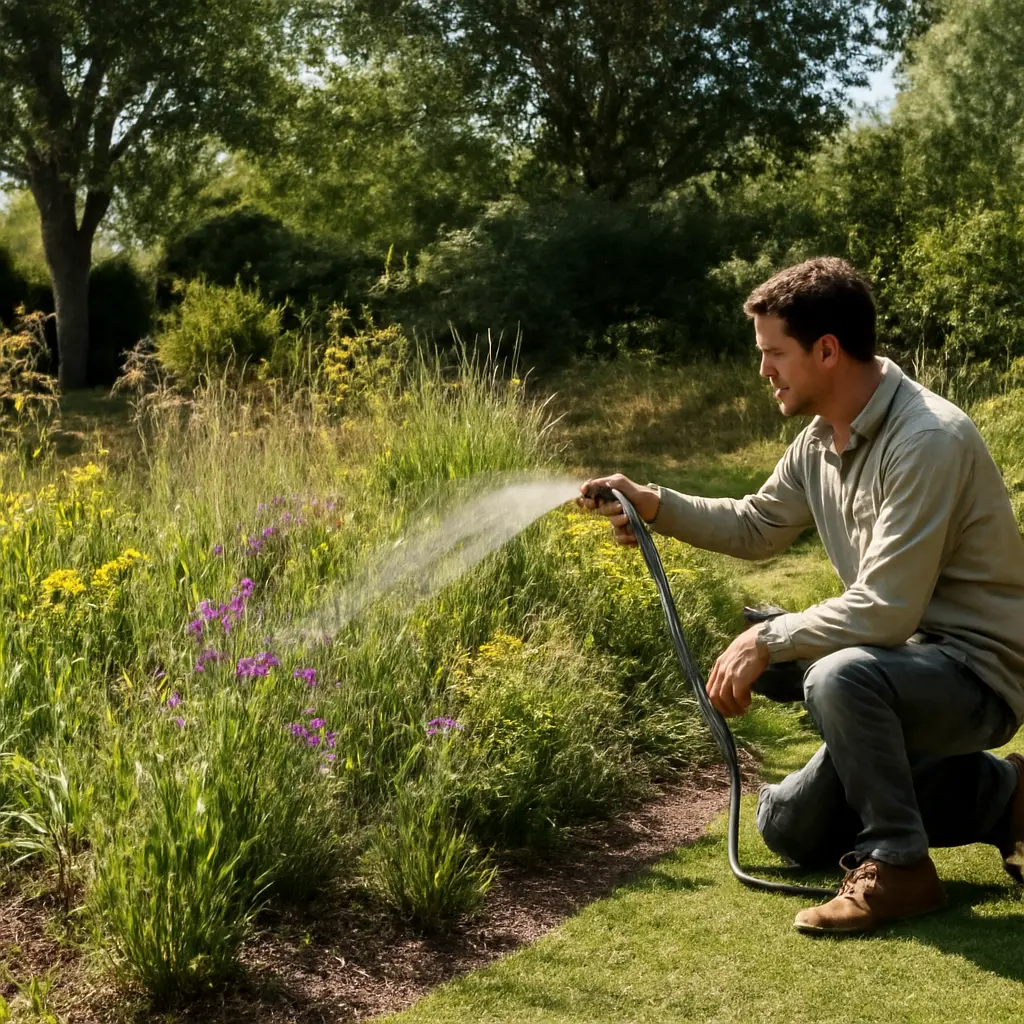
Native plants generally support more local wildlife than a conventional, closely mown lawn because they provide food, shelter, and breeding habitat suited to local species. But “native versus grass” is not an all-or-nothing choice: a diverse native planting usually offers more ecological value than a species-poor lawn, while a lawn can still serve practical purposes and can be improved by reducing chemicals, adding clover or other flowers, and leaving some areas unmown. Research comparing landscapes has found that native plants support more abundant and diverse insect communities, and those insects help sustain birds and other wildlife.
Wildlife support explains the difference between native plants and lawn grass
A native plant is a species that occurs naturally in a particular region and became established there without human introduction. Lawn grass is a management category rather than a single ecological group: residential lawns commonly contain a few turfgrass species, such as Kentucky bluegrass, perennial ryegrass, or fescues, maintained at a short height. The ecological distinction is therefore less “flower versus grass” than a diverse, locally adapted plant community versus a simplified, frequently cut surface.
Doug Tallamy, an entomologist at the University of Delaware, has emphasized that native plants are especially valuable because local insects have evolved with them and can use them as food and habitat. In a peer-reviewed comparison of suburban landscapes in Pennsylvania, Tallamy and his coauthors found that properties with more native plants supported more caterpillar biomass than properties dominated by introduced plants. Caterpillars are an important food source for many breeding birds. The findings support a general pattern, not a promise that every native planting will outperform every lawn under every condition: plant diversity, location, maintenance, and landscape context all matter.
Native-plant wildlife support depends on food, shelter, and local fit
Wildlife value describes how well a landscape supplies animals’ needs across their life cycles. For plants, that can include nectar, pollen, leaves eaten by insect larvae, seeds, fruit, nesting material, and protected places to overwinter. A yard with several plant layers and flowering or seed-producing species across the seasons tends to offer more kinds of resources than a uniform lawn.
Native plants feed specialist insects and the animals that eat them
Many native insects are specialists: their larvae can develop on only one plant species or a narrow group of related plants. The National Wildlife Federation’s Native Plant Finder, drawing on research by Tallamy and Douglas W. Shropshire, ranks native plants by the number of caterpillar species they support. In the eastern United States, the native oak genus, Quercus, supports hundreds of caterpillar species—far more than many commonly planted nonnative ornamentals.
That insect abundance matters beyond the insects themselves. Caterpillars and other arthropods feed nestlings, while adult insects pollinate flowers and become food for spiders, amphibians, and other predators. A native garden is not automatically rich in wildlife simply because its plants are native, however. A few species, especially if they flower at only one time of year, may leave food gaps. A mix of native trees, shrubs, and herbaceous plants is generally more useful than a single-species planting.
Native plantings provide shelter and breeding habitat
Habitat includes places to feed, hide, nest, reproduce, and survive adverse seasons. Dense grasses and perennial stems can shelter insects and small animals; shrubs and trees provide nesting sites and cover; seed heads and fallen leaves offer food and overwintering habitat. Leaving some stems standing through winter and keeping leaf litter in appropriate areas can preserve these resources.
The U.S. Fish and Wildlife Service’s pollinator guidance recommends choosing plants that provide nectar and pollen through the growing season and maintaining nesting and overwintering sites. These principles apply to more than bees: a layered landscape can benefit butterflies, moths, birds, and other wildlife. Local conditions still matter. A small garden designed for pollinators, for example, may not provide the same nesting habitat as a mature native shrub border.
Regional native plants make the greatest ecological sense
“Native” is geographically specific. A plant native to one part of a country may not be native to another, and local soil, rainfall, and climate influence whether it thrives. The U.S. Environmental Protection Agency advises selecting plants suited to local conditions as part of sustainable landscaping. Regional native-plant societies, university extension services, and locally sourced seed suppliers can help identify appropriate species.
A useful planting plan combines plants that bloom at different times, produce seeds or fruits, and offer structure through winter. Avoiding invasive species is essential: a nonnative plant that spreads aggressively can displace native vegetation and reduce habitat quality. Native plants are also not necessarily maintenance-free; they may need establishment watering, seasonal trimming, or management to prevent unwanted spread.
Lawn grass supports some wildlife but usually offers limited habitat
A conventional lawn is a managed turf area, typically kept short through frequent mowing and often treated with fertilizer or pesticides. Its simple structure can provide open space for recreation, paths, and some ground-foraging birds. Yet a closely cut monoculture usually supplies fewer types of food and shelter than a diverse planting, particularly when it contains few flowering plants and is maintained with chemicals.
Short turf offers open ground rather than diverse resources
Some birds, including robins and starlings, forage on lawns for earthworms and other invertebrates, and lawn areas can be useful for play and movement. However, turf cut short removes much of the vegetation structure that insects and small animals use for cover and reproduction. Turfgrass leaves also generally do not support the same range of specialist caterpillars as many native trees and shrubs.
The National Wildlife Federation’s wildlife-gardening guidance recommends reducing lawn where it is not needed and replacing portions with native plants. This does not mean eliminating every lawn. A practical yard can retain a compact play or seating area while converting unused edges, slopes, and strips into more diverse habitat.
Mowing, chemicals, and watering shape lawn impacts
Maintenance determines much of a lawn’s environmental effect. Frequent mowing can remove flowers before they set seed and disturb insects; fertilizers can contribute to nutrient runoff, while pesticides can harm nontarget organisms. Water demand varies greatly by climate and grass type, but cool-season turf in hot, dry regions may require substantial irrigation to remain green.
The U.S. Environmental Protection Agency identifies fertilizer and pesticide runoff as potential sources of water pollution and recommends practices such as using only the nutrients needed, following label directions, and preventing chemicals from reaching storm drains. Less intensive lawn care can improve habitat value: mow less often where feasible, keep pesticide use to a minimum, and allow safe, intentional patches of clover or other flowering plants to remain.
A mixed yard can balance wildlife, recreation, and upkeep
A wildlife-friendly yard does not have to choose between a lawn and a native garden. The strongest approach is often to match each part of the property to its purpose: keep turf where people use it, and place diverse plantings where they can provide habitat without obstructing access or sightlines.
Replace low-use lawn in stages
Start with areas that are difficult to mow or rarely used, such as narrow borders, steep slopes, or spaces beneath suitable trees. Plant regionally appropriate groundcovers, flowering perennials, shrubs, or trees, and include species that bloom at different times. Staging the conversion makes it easier to learn which plants thrive and to manage costs and maintenance.
Keep habitat connected and welcoming
Wildlife can benefit when yards connect to parks, stream corridors, and neighboring gardens. Even small patches can contribute food and cover, but their value increases when they form part of a broader network. Choose a variety of plant heights and flowering periods, retain some leaf litter and stems where appropriate, and avoid pesticide applications that could undermine the habitat being created.
Use a simple comparison to guide decisions
The following text-based comparison summarizes typical tendencies; actual outcomes depend on region, plant selection, and maintenance.
- Food for specialist insects: diverse native planting generally provides more; species-poor turf generally provides less.
- Shelter and nesting structure: layered plantings generally provide more; short, frequently cut turf generally provides less.
- Open recreational space: lawn generally provides more; dense native planting provides less.
- Water and chemical needs: both vary, but locally suited plants and reduced-input maintenance can lower demands compared with intensively maintained turf.
A simple chart for a property could map the lawn area, native planting area, and seasonal flowering coverage over time. Recording those measures alongside observations of pollinators and birds can help residents see whether a change is improving habitat, rather than relying on appearance alone.
Conclusion: wildlife generally benefits when native habitat replaces excess lawn
Native plants tend to support more local wildlife than a conventional lawn because they provide regionally appropriate food, shelter, and life-cycle resources. Lawn grass can still be useful for recreation and open space, but closely mown, chemically intensive turf typically offers less diverse habitat. The most practical strategy is to retain lawn where it serves a clear purpose and convert low-use portions into layered plantings of local native species.
To take action, identify suitable native plants through a local extension service or native-plant organization, reduce unnecessary mowing and chemical use, and add habitat gradually. Small, connected improvements across many yards can contribute to healthier neighborhood ecosystems.
Sources: Tallamy, Douglas W., and Kyle J. Shropshire, “Ranking Lepidopteran Use of Native Versus Introduced Plants,” Biological Conservation, 2013, https://doi.org/10.1016/j.biocon.2012.10.009; National Wildlife Federation, Native Plant Finder, https://www.nwf.org/nativeplantfinder/; National Wildlife Federation, Gardening for Wildlife, https://www.nwf.org/Garden-for-Wildlife; U.S. Fish and Wildlife Service, “Pollinators,” https://www.fws.gov/program/pollinators; U.S. Environmental Protection Agency, Green Landscaping: Greenacres, https://www.epa.gov/greenacres; U.S. Environmental Protection Agency, Nutrient Pollution: The Sources and Solutions, https://www.epa.gov/nutrientpollution/sources-and-solutions.