
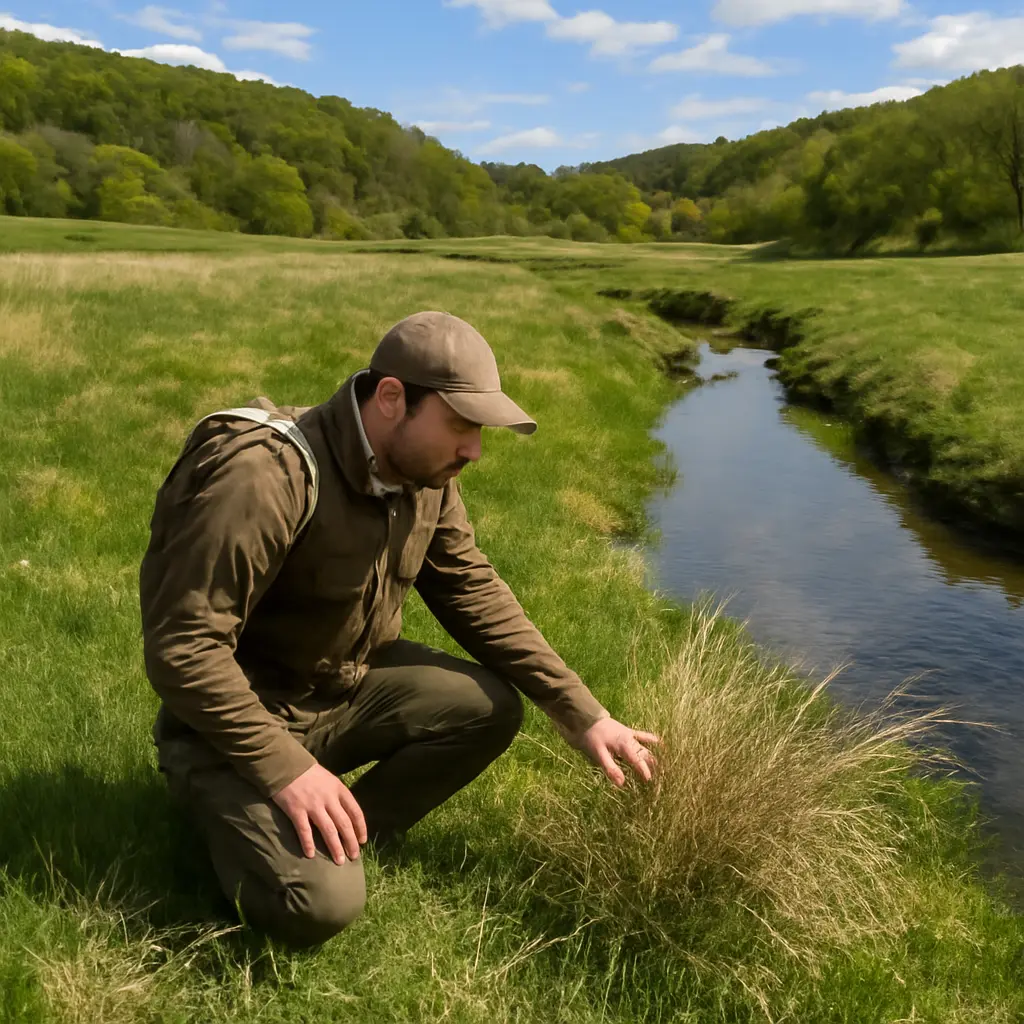
Conservation lands are working landscapes and protected places managed to sustain nature while supporting people. Evidence from national parks, private land trusts, Indigenous stewardship, and working farms and forests shows measurable results: protected areas help conserve habitat, store carbon, safeguard water, and support local economies. Their success depends on lasting funding, effective management, and partnerships with the communities who live and work on the land.
Conservation lands deliver measurable outcomes
“Conservation land” is a broad term for land managed to protect ecological, cultural, or public values, often while allowing compatible activities such as recreation, grazing, forestry, or traditional harvesting. The International Union for Conservation of Nature (IUCN) defines a protected area as a clearly defined geographical space, recognized and managed to achieve the long-term conservation of nature and associated ecosystem services and cultural values.
The scale is significant. The Protected Planet Report 2024, from the United Nations Environment Programme World Conservation Monitoring Centre and IUCN, reports that roughly 17.6% of the world’s land and inland waters are within protected and conserved areas. That is meaningful progress, but it remains below the global goal of conserving at least 30% of land and inland waters by 2030. Coverage alone, however, does not establish success: ecological condition, connectivity, representation of species and habitats, and equitable governance also matter.
Protected areas conserve habitat and biodiversity
National parks, wildlife refuges, wilderness areas, and other protected sites are intended to maintain natural systems and the species that depend on them. A 2019 study in Science, led by Kendall Jones and colleagues, found that protected areas generally reduce human pressure on nature, but that pressure remains high in many sites. The finding highlights a practical distinction: designation creates a framework for conservation, while monitoring, staffing, enforcement, and community support determine how well that framework works.
In the United States, the National Park Service’s 2023 visitation report recorded about 325.5 million recreation visits to national parks. These visits demonstrate the public value of protected landscapes, while also underscoring the need to manage crowding, trails, wildlife disturbance, and infrastructure impacts.
Conserved areas include more than government parks
The conservation-land category also includes Indigenous and community conserved areas, private conservation lands, and other effective area-based conservation measures—places that may not carry a formal protected-area designation but achieve durable, effective conservation. This broader view matters because biodiversity persists across connected landscapes, not only inside park boundaries. IUCN and the Convention on Biological Diversity recognize that conserved areas can be governed by governments, Indigenous peoples, local communities, private owners, or shared arrangements.
The next test is whether these different forms of stewardship can be connected and supported. When land conservation protects ecological function while sustaining livelihoods, it can produce benefits beyond biodiversity alone.
Conservation lands support climate resilience and clean water
Natural and working lands can store carbon, reduce climate risks, and help regulate water. Their performance depends on the ecosystem and its condition: forests, wetlands, grasslands, and peatlands store carbon in different ways, and disturbance such as drainage, fire, or conversion can reduce those benefits. The Intergovernmental Panel on Climate Change identifies ecosystem protection and restoration as important options for climate mitigation and adaptation, while emphasizing that land-based actions must account for local ecological and social conditions.
Forests and wetlands store carbon
Protecting intact forests can avoid emissions associated with clearing and degradation, while restoring damaged ecosystems can rebuild carbon stocks over time. Wetlands are especially important where waterlogged soils accumulate organic matter. The U.S. Environmental Protection Agency explains that wetlands also provide flood storage, water-quality improvement, and habitat. These benefits are not automatic: restoration needs to match local hydrology and native ecosystem conditions, and climate change can alter the risks a site faces.
Watersheds and riparian lands protect water supplies
Conservation upstream can benefit people downstream by protecting streambanks, filtering sediment, and maintaining natural water storage. A well-known 2005 study in Science by Robert Costanza and colleagues estimated that New York City avoided the need for a costly filtration plant by investing in watershed protection and restoration in the Catskills and Croton watersheds. The case demonstrates how land management can function as water infrastructure, although the financial and ecological outcomes depend on local conditions and continued watershed stewardship.
These climate and water benefits connect directly to working lands, where conservation practices can keep production on the landscape while reducing damage to soil and habitat.
Working conservation lands sustain livelihoods and nature
Working conservation lands are farms, ranches, forests, and other managed landscapes where production continues alongside measures to protect ecological values. Examples include easements that limit development, wildlife-friendly grazing, sustainable forestry, soil conservation, and agroforestry. The approach recognizes that conservation is not always achieved by excluding human use; in many places, long-term stewardship and viable local livelihoods are central to maintaining ecological health.
Private conservation easements keep land in use
A conservation easement is a voluntary legal agreement that restricts specified development or uses on a property while the owner generally retains ownership and may continue compatible activities. The Land Trust Alliance’s 2020 National Land Trust Census reported that U.S. land trusts had conserved more than 61 million acres through easements and other methods. Easements can protect farms, forests, scenic landscapes, and habitat, but their effectiveness depends on clear terms, baseline documentation, regular monitoring, and resources for long-term stewardship.
Ranching and farming can conserve habitat
Managed grazing, cover crops, field margins, and protection of wetlands or stream corridors can support soil health and wildlife when adapted to local conditions. In the United States, the Natural Resources Conservation Service’s Working Lands for Wildlife initiative partners with producers to improve habitat while keeping land in production. Such programs show how conservation can be practical on private property: producers retain working operations, while agreed practices address specific species, soil, or water concerns. Outcomes should be assessed with site-level monitoring rather than assumed from practice adoption alone.
Indigenous stewardship strengthens conservation
Indigenous-led conservation draws on longstanding relationships, knowledge, and governance responsibilities tied to land and water. The ICCA Consortium describes territories and areas conserved by Indigenous peoples and local communities as places where communities maintain ecological and cultural values through their own governance systems. Recognition, consent, secure tenure, and durable support are essential; conservation targets should not be pursued by displacing communities or disregarding their rights.
Conservation land success depends on management and connection
A map showing protected acreage is useful, but it is not a complete measure of conservation. The Protected Planet Report 2024 emphasizes the need to improve ecological representation, connectivity, management effectiveness, and equitable governance as countries work toward the 30-by-30 target. A reserve that is isolated, underfunded, or poorly managed may not protect species and ecological processes as intended.
Connectivity helps wildlife adapt
Wildlife corridors and connected natural areas allow species to move between habitats, find food, and respond to changing conditions. The U.S. Geological Survey’s work on landscape connectivity shows why conservation planning considers not just individual parcels but how they relate to surrounding land. Corridors may include river networks, forest links, grassland routes, or crossings over roads. Their usefulness depends on species needs, habitat quality, and whether barriers such as roads or development are addressed.
Monitoring verifies results
Monitoring turns conservation goals into testable outcomes. Managers can track indicators such as native-species occupancy, water quality, vegetation condition, fire patterns, carbon stocks, or access to culturally important places. The National Park Service’s inventory and monitoring program, for example, uses long-term ecological data to help managers understand changes in park resources. Transparent reporting allows communities and funders to see what is improving, where pressures persist, and which interventions need adjustment.
Conclusion: conservation lands are working, but stewardship must continue
Evidence from protected areas, watersheds, working farms and forests, private easements, and Indigenous stewardship shows that conservation lands can protect habitat, support climate resilience, safeguard water, and sustain livelihoods. Global coverage has expanded, and examples such as New York City’s watershed investments show that protecting land can also serve practical public needs. Yet acreage alone is not proof of lasting success. Effective management, ecological connections, community rights, reliable funding, and measurable outcomes are essential.
Readers can help by supporting local land trusts and Indigenous-led conservation, learning how nearby public lands are managed, and asking decision-makers to report on ecological results as well as acres protected. Further reading from Protected Planet, the Land Trust Alliance, and the National Park Service can help communities evaluate what is working on the ground.
Sources: International Union for Conservation of Nature, IUCN Guidelines for Applying Protected Area Management Categories, https://portals.iucn.org/library/node/30018; UNEP-WCMC and IUCN, Protected Planet Report 2024, https://protectedplanet.net/en/resources/protected-planet-report-2024; Jones et al., “One-third of global protected land is under intense human pressure,” Science, 2019, https://www.science.org/doi/10.1126/science.aaw2869; National Park Service, 2023 National Park Visitor Spending Effects and Visitation Statistics, https://www.nps.gov/subjects/socialscience/visitoruse-statistics.htm; Intergovernmental Panel on Climate Change, Climate Change 2022: Mitigation of Climate Change, https://www.ipcc.ch/report/ar6/wg3/; U.S. Environmental Protection Agency, Why Are Wetlands Important?, https://www.epa.gov/wetlands/why-are-wetlands-important; Costanza et al., “The Value of the World’s Ecosystem Services and Natural Capital,” Science, 1997, https://www.science.org/doi/10.1126/science.387.6630.253; Land Trust Alliance, 2020 National Land Trust Census, https://landtrustalliance.org/resources/learn/explore/2020-national-land-trust-census; USDA Natural Resources Conservation Service, Working Lands for Wildlife, https://www.nrcs.usda.gov/programs-initiatives/working-lands-for-wildlife; ICCA Consortium, Territories of Life, https://www.iccaconsortium.org/; National Park Service, Inventory and Monitoring Program, https://www.nps.gov/im/.