
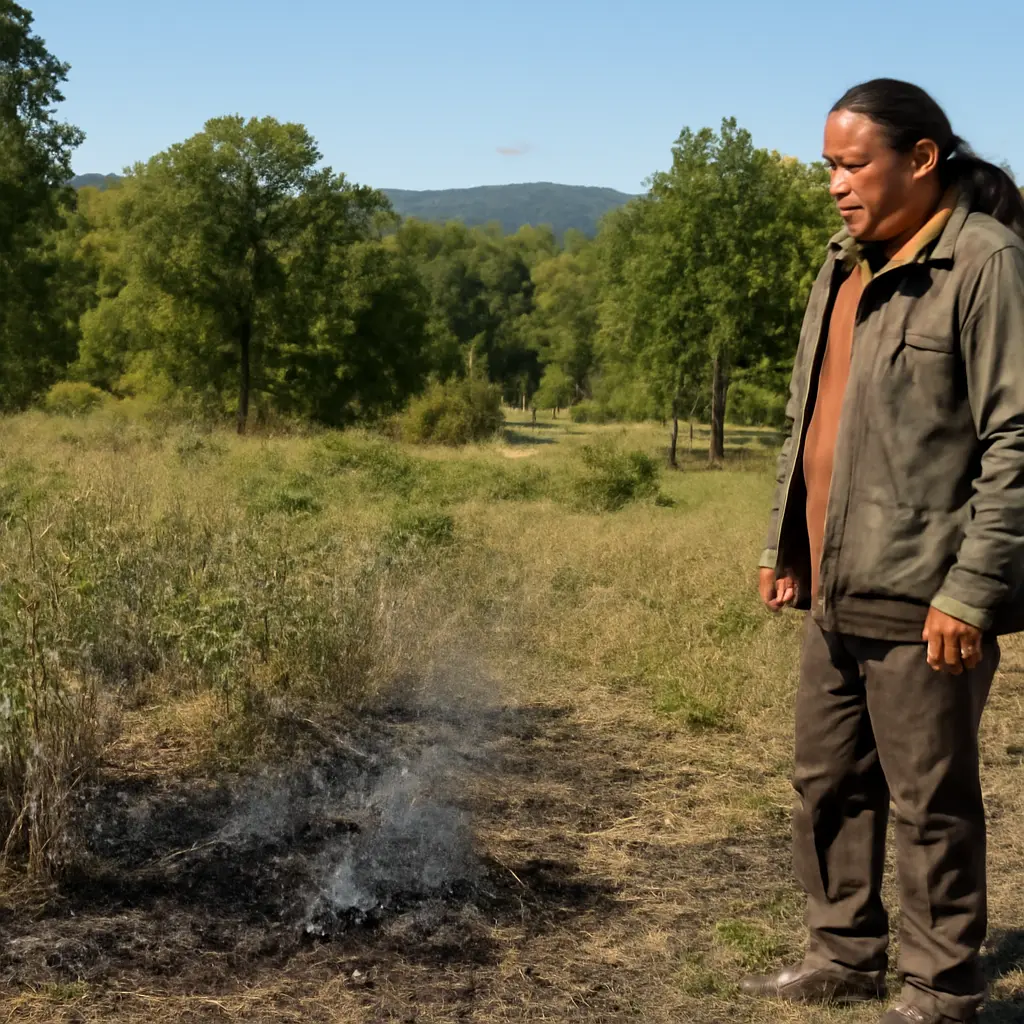
Indigenous knowledge is the place-based knowledge, practices, and relationships that Indigenous peoples have developed and maintained across generations. It can reveal ecological patterns that short-term surveys and standardized conservation plans miss—from how cultural burning shapes fire-resilient landscapes to how seasonal harvesting rules protect wildlife. This matters at global scale: the Intergovernmental Science-Policy Platform on Biodiversity and Ecosystem Services (IPBES) estimates that at least a quarter of the world’s land area is traditionally owned, managed, used, or occupied by Indigenous peoples, and that nature is generally declining less rapidly on Indigenous-managed lands. Recognizing this knowledge can improve conservation, but only when Indigenous rights, consent, and authority are respected.
Indigenous knowledge reveals ecological relationships modern conservation can overlook
Indigenous knowledge is not a single, uniform body of information. It includes distinct systems of observation, interpretation, practice, and governance, rooted in particular communities and territories. The Convention on Biological Diversity uses the term “traditional knowledge” for the knowledge, innovations, and practices of Indigenous peoples and local communities embodying traditional lifestyles relevant to the conservation and sustainable use of biological diversity. The definition matters: this knowledge is connected to living cultures and responsibilities, not simply a dataset available for outside use.
Conservation science can provide powerful tools for measuring species, habitats, and environmental change. Yet field surveys may cover limited time periods, while Indigenous observation often reflects repeated experience across seasons and generations. The IPBES Global Assessment reported that nature is declining less rapidly in areas managed by Indigenous peoples, while warning that these lands face growing pressures. This finding does not mean Indigenous territories are untouched or that every community uses identical practices. It underscores the importance of Indigenous stewardship and the risks of excluding it from conservation decisions.
Place-based observation and long-term ecological change
Place-based ecological knowledge is detailed understanding of a particular landscape, including species behavior, habitat conditions, seasonal cycles, and environmental change. It may come from fishing, hunting, gathering, cultivation, travel, and other ongoing relationships with place. Because knowledge holders observe the same areas over time, they may notice changes in migration, flowering, water levels, or species abundance that a short research project would not detect.
This knowledge can complement instruments and formal surveys rather than replace them. For example, community observations can help researchers decide when and where to sample, interpret unexpected results, and identify locally meaningful indicators. IPBES emphasizes that Indigenous and local knowledge contributes to understanding biodiversity and ecosystem change, while also noting that knowledge systems have their own methods and contexts. Responsible research therefore involves collaboration and clear agreement about how information is collected and used.
Cultural burning and fire-resilient landscapes
Cultural burning refers to Indigenous-led, culturally informed use of fire for purposes such as caring for land, supporting food and material resources, and reducing hazardous fuel. Practices differ among communities and ecosystems; it is not a generic prescription to burn more often. In Australia, Aboriginal fire stewardship has been associated with carefully timed, patchy burns that can create varied habitat and limit the spread of some large, intense fires when conditions and local objectives permit.
Research in northern Australia has documented the potential for Indigenous fire management to reduce late-season wildfire emissions and generate environmental and community benefits. Those outcomes depend on local knowledge, land tenure, weather, and sustained management—not simply on applying a technique elsewhere. Cultural burning programs are most meaningful when Indigenous practitioners set priorities and hold decision-making authority, rather than being treated as contractors supplying a service.
Harvesting protocols and species stewardship
Indigenous harvesting protocols are community-defined rules and responsibilities that guide when, where, and how resources are gathered. They can include seasonal limits, selective harvesting, respectful treatment of species, and rules for sharing. These protocols are often tied to cultural obligations and governance, not just to the goal of maximizing future yields.
Such practices can provide conservation insights by identifying breeding periods, vulnerable habitats, or signs that a population needs respite. Their effectiveness should be assessed in context: a practice that works in one place may not transfer to another, and ecological outcomes can be shaped by outside pressures such as habitat loss or commercial extraction. Conservation agencies can support stewardship by recognizing community rules and resource rights instead of assuming that centralized regulations are always the best fit.
Indigenous knowledge improves conservation when governance shares power
Bringing Indigenous knowledge into conservation is not merely a matter of adding local observations to a scientific report. It also requires attention to who defines the problem, controls data, decides what counts as evidence, and benefits from the outcome. The United Nations Declaration on the Rights of Indigenous Peoples affirms Indigenous peoples’ rights to maintain, control, protect, and develop their cultural heritage, traditional knowledge, and cultural expressions. Those rights are directly relevant to conservation partnerships and research.
Co-management and Indigenous-led conservation
Co-management is an arrangement in which Indigenous governments or communities and public agencies share some responsibilities for managing lands and waters. The term covers a range of models, so the label alone does not establish whether power is genuinely shared. Effective arrangements provide meaningful authority, stable resources, respect for Indigenous law and priorities, and processes for resolving disputes.
Indigenous and community conserved areas offer another model: places conserved through Indigenous peoples’ and local communities’ own governance and collective action, whether or not governments formally recognize them as protected areas. The International Union for Conservation of Nature recognizes these areas as part of the broader landscape of conservation. Supporting them can strengthen biodiversity protection while respecting that communities may value a territory for cultural, spiritual, livelihood, and ecological reasons at once.
Knowledge sovereignty, consent, and data protection
Knowledge sovereignty is the right of Indigenous peoples to govern their knowledge, including decisions about access, interpretation, storage, and sharing. A map of a sensitive species, sacred place, or harvesting area may create risks if it is published or circulated without permission. Researchers and agencies should establish consent and data-governance terms before collecting information, explain potential uses in accessible language, and allow communities to restrict or withdraw access where agreed.
The CARE Principles for Indigenous Data Governance—Collective Benefit, Authority to Control, Responsibility, and Ethics—were developed to help ensure that data practices support Indigenous self-determination and benefit. They complement technical standards for data management by asking who gains value and who bears risk. Following these principles can help prevent extractive research in which knowledge is taken from a community but decisions and benefits remain elsewhere.
Combining knowledge systems without erasing differences
Knowledge co-production is collaborative work in which Indigenous knowledge holders and researchers jointly shape questions, methods, interpretation, and use of results. Good co-production does not require every knowledge system to be translated into the same categories or treated as interchangeable. It makes room for differences in evidence, responsibility, and worldviews while agreeing on practical decisions where collaboration is desired.
A useful partnership begins by asking what the community wants to protect, what information can be shared, and what authority participants will hold. Researchers can then combine methods—such as monitoring, oral history, mapping, and field observation—under agreed protocols. This approach can make conservation more locally relevant and scientifically informative, while reducing the risk that collaboration becomes consultation without influence.
Conservation practice must address evidence gaps and historical harms
Indigenous stewardship is not automatically recognized in conservation statistics or official protected-area maps. IPBES notes that biodiversity data can be limited for Indigenous lands and that pressures including extractive industries, land-use change, and climate change threaten many territories. Conservation assessments should therefore be cautious about treating a lack of recorded information as a lack of stewardship—or assuming that formal designation alone guarantees effective protection.
Protected areas, displacement, and rights-based conservation
Some protected areas have been established through “fortress conservation,” an approach that restricts local access in the belief that nature is best protected by separating people from it. In practice, conservation histories include cases of Indigenous displacement and limits on customary use. These harms can damage livelihoods and culture while weakening trust in conservation institutions.
Rights-based conservation instead recognizes that protecting biodiversity should not depend on removing Indigenous peoples from their territories or denying their governance. The Convention on Biological Diversity’s Kunming-Montreal Global Biodiversity Framework calls for conservation to respect the rights of Indigenous peoples and local communities, including over their traditional territories. Meeting global conservation goals therefore requires both ecological outcomes and fair, accountable processes.
How to evaluate conservation partnerships
Partnerships should be assessed through more than the number of meetings or amount of knowledge collected. Relevant questions include whether communities set priorities, whether consent is ongoing, whether Indigenous authorities can influence or stop a project, and whether funding and benefits are shared fairly. Ecological monitoring should also use indicators selected with knowledge holders and suited to the local context.
- Recognize Indigenous land and resource rights, and support community-defined conservation priorities.
- Agree on consent, attribution, confidentiality, data access, and benefit-sharing before research begins.
- Fund Indigenous-led monitoring and stewardship over the long term, not only short pilot projects.
- Report ecological results alongside measures of community authority, cultural continuity, and equitable outcomes.
A useful visual for readers is a comparison chart showing each conservation case’s governance model, ecological indicators, community-defined outcomes, and data-sharing rules. Such a chart should not rank knowledge systems as if one were universally superior; it should make the partnership’s responsibilities and results transparent.
Conclusion: Indigenous knowledge is essential to durable conservation
Indigenous knowledge can reveal long-term ecological change, guide place-specific stewardship such as cultural burning and harvesting protocols, and improve conservation decisions through co-management and knowledge co-production. The evidence summarized by IPBES shows the global importance of Indigenous-managed lands, while international rights frameworks make clear that collaboration must respect Indigenous authority and knowledge sovereignty. Conservation agencies, researchers, and funders should support Indigenous-led priorities, protect sensitive information, and evaluate both ecological results and the fairness of decision-making. For further reading, consult the IPBES Global Assessment, the Convention on Biological Diversity’s knowledge provisions, the CARE Principles, and the United Nations Declaration on the Rights of Indigenous Peoples.
Sources: Intergovernmental Science-Policy Platform on Biodiversity and Ecosystem Services, Global Assessment Report on Biodiversity and Ecosystem Services, https://ipbes.net/global-assessment; Convention on Biological Diversity, Article 8(j): Traditional Knowledge, https://www.cbd.int/traditional/; United Nations, United Nations Declaration on the Rights of Indigenous Peoples, https://www.un.org/development/desa/indigenouspeoples/declaration-on-the-rights-of-indigenous-peoples.html; International Union for Conservation of Nature, Indigenous and Community Conserved Areas and Territories, https://www.iucn.org/our-work/region/asia/our-work/indigenous-peoples-and-conservation/indigenous-and-community-conserved-areas; Global Indigenous Data Alliance, CARE Principles for Indigenous Data Governance, https://www.gida-global.org/care; Convention on Biological Diversity, Kunming-Montreal Global Biodiversity Framework, https://www.cbd.int/gbf