
Pet sterilization—spaying females or neutering males—is surgery intended to prevent reproduction, and it is generally considered safe when performed by a veterinary team using appropriate anesthesia, monitoring, and pain relief. But “rare” does not mean “impossible”: complications can include bleeding, infection, anesthetic problems, or delayed healing, while some longer-term effects depend on the animal’s species, sex, breed, age, and health. Owners can reduce avoidable risk by following pre- and postoperative instructions, recognizing warning signs, and discussing individualized timing with a veterinarian. The evidence below explains what complications mean, how common published estimates are, what changes after surgery, and when to seek help.
Veterinary sterilization complications: what the risks mean
A complication is an unwanted medical event associated with an operation or recovery; it does not necessarily mean that the surgery was performed incorrectly. The American Veterinary Medical Association describes spaying and neutering as common procedures, while emphasizing that decisions about whether and when to sterilize should be made with a veterinarian based on the individual animal.
Risk estimates vary because studies count different outcomes, follow animals for different periods, and include different patient populations. A minor incision irritation, a return visit, and a life-threatening anesthetic event are not equivalent outcomes. A large UK study published in Scientific Reports in 2022 reviewed electronic records from 157,318 dogs and cats undergoing neutering; recorded perioperative mortality was uncommon, but the study’s figures should not be treated as a universal rate because they reflect a particular dataset, definitions, and care setting.
Immediate surgical complications
Immediate complications occur during surgery or in the first hours afterward. They include bleeding, tissue injury, unexpected reactions to medications, and problems associated with anesthesia. In females, spaying involves abdominal surgery to remove the ovaries, usually with the uterus; in males, neutering usually removes the testicles through a smaller incision. The procedure and its risks therefore differ by sex and technique.
Anesthetic risk is shaped by more than the procedure itself. Age, heart or respiratory disease, body condition, breed-related airway features, and emergency versus planned surgery can affect an animal’s risk profile. The American Animal Hospital Association’s anesthesia guidance stresses individualized assessment, monitoring, and recovery supervision. Owners should share a complete medication and health history and ask what monitoring will be used.
Incision and recovery problems
Postoperative complications include infection, swelling, bruising, wound opening, and self-inflicted injury from licking or chewing. Some mild bruising or a small amount of swelling may be expected, but worsening redness, discharge, increasing pain, or a gaping incision needs veterinary advice. A pet that is persistently vomiting, unusually weak, struggling to breathe, or collapsing requires urgent assessment rather than watchful waiting.
A practical way to distinguish routine recovery from a warning sign is to track change over time. A stable pet that gradually becomes more comfortable is different from one whose pain, swelling, or lethargy is worsening. Follow the clinic’s instructions on activity restriction, medication, bathing, and follow-up; do not apply human painkillers or topical products unless the veterinarian specifically directs you to.
Sterilization recovery: which complications owners can prevent or catch early
Recovery means the period in which anesthesia wears off and tissues heal. The American College of Veterinary Surgeons advises protecting surgical incisions and limiting activity as directed; jumping, rough play, and licking can strain the wound. The exact restriction period depends on the operation and the patient, so the discharge instructions from the treating clinic take precedence over generic timelines.
Home monitoring and the incision
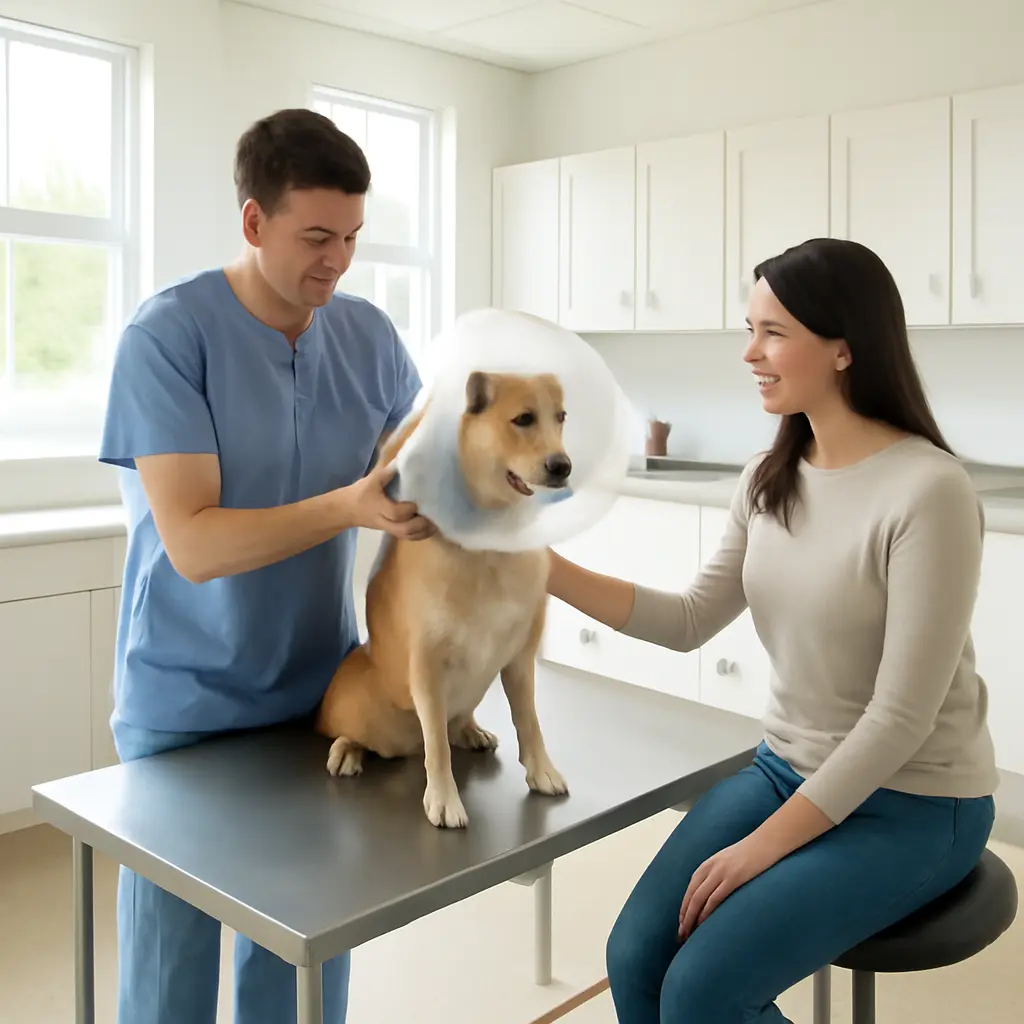
Check the incision at least daily, or as instructed, without touching or cleaning it unless directed. Contact the clinic if the wound becomes increasingly red, hot, painful, swollen, or produces blood or discharge, or if its edges separate. An Elizabethan collar or another veterinarian-approved barrier may be needed to prevent licking. Keep the pet indoors and calm, and use a leash for brief toilet breaks when appropriate.
Owners should also watch general behavior: appetite, drinking, urination, bowel movements, comfort, and alertness. A short period of sleepiness after anesthesia may occur, but severe or persistent dullness, repeated vomiting, pale gums, labored breathing, or collapse should prompt immediate contact with a veterinary service. If unsure, call the operating clinic and describe what has changed and when.
Medication, fasting, and follow-up
Preoperative fasting instructions help reduce the risk of regurgitation and aspiration during anesthesia, but fasting rules vary with age, species, health, and appointment time. Do not extend fasting beyond the clinic’s directions, particularly for young or medically fragile animals. Give prescribed medication exactly as labeled and ask the veterinarian before stopping, changing, or adding any drug.
Follow-up matters even when the pet appears well. A clinic may request a wound check or suture removal, depending on the closure method. A photo can help document changes between checks, but it cannot replace an examination when the pet is unwell or the incision is opening. Owners should keep the discharge sheet and emergency contact details accessible.
Long-term effects after sterilization: risk depends on the animal
Long-term effects are outcomes that may emerge months or years after surgery, rather than immediate surgical mishaps. Sterilization prevents pregnancy and eliminates the risk of certain reproductive diseases, but it can also influence body weight and, in some dogs, the likelihood of particular orthopedic or other conditions. These associations do not prove that surgery alone causes every outcome, and findings in one breed or species should not be generalized to all pets.
Weight and metabolism
Weight gain is a manageable concern after sterilization, partly because energy needs and appetite can change. The Association for Pet Obesity Prevention’s 2022 U.S. survey estimated that 59% of cats and 61% of dogs were overweight or had obesity, demonstrating that excess weight is already widespread—not that sterilization alone explains it. Ask the veterinarian to reassess food portions, body condition, and activity after surgery rather than keeping the same feeding plan automatically.
Timing, breed, and individual health
The best timing is not identical for every dog or cat. The American Animal Hospital Association’s canine life-stage guidance and the American Veterinary Medical Association both support individualized decision-making, taking account of size, breed, lifestyle, reproductive plans, and medical history. Research by Benjamin Hart and colleagues, published in Frontiers in Veterinary Science, found that associations between sterilization timing and selected joint disorders or cancers varied across dog breeds. Such observational findings can inform a discussion, but they are not a prediction that a particular pet will develop disease.
For cats, preventing unwanted litters and addressing population-level welfare remain important considerations. For dogs, especially large and giant breeds, owners may wish to ask whether waiting until a particular growth stage is appropriate. The veterinarian can balance reproductive, behavioral, medical, and community considerations rather than relying on a single age rule.
How owners can make sterilization safer
Safety is shared between the veterinary team and the owner. Before scheduling, disclose prior anesthetic reactions, chronic conditions, allergies, current medications or supplements, and any recent illness. Ask what pre-anesthetic assessment is recommended, how the pet will be monitored, what pain control is planned, and whom to call after hours.
- Confirm fasting, drop-off, medication, and pickup instructions with the clinic.
- Use the prescribed recovery collar or protective garment if recommended.
- Restrict running, jumping, and rough play for the period specified by the veterinarian.
- Inspect the incision and monitor behavior, appetite, breathing, and comfort.
- Call promptly about worsening symptoms; seek emergency care for breathing difficulty, collapse, uncontrolled bleeding, or severe weakness.
- Discuss long-term weight management and the most appropriate sterilization timing for the individual pet.
These steps do not eliminate every complication, but they help prevent avoidable wound problems and make concerning changes easier to recognize. Clinics can also explain whether their procedure includes routine monitoring and what their plan is if an unexpected event occurs.
Conclusion: informed planning makes rare complications easier to manage
Sterilization complications are uncommon, yet owners should understand both immediate surgical risks and the recovery issues they can help prevent. Incision monitoring, medication and activity instructions, and timely veterinary contact are practical safeguards. Longer-term questions—including weight, breed-related findings, and timing—are best handled through an individualized conversation with a veterinarian. Before the procedure, ask about anesthesia, pain control, warning signs, and follow-up; afterward, follow the clinic’s plan and act quickly if your pet’s condition worsens.
Sources: American Veterinary Medical Association, Spaying and Neutering, https://www.avma.org/resources-tools/pet-owners/petcare/spaying-and-neutering; Brodbelt, D. C., et al., “The risk of death: the confidential enquiry into small animal perioperative mortality,” Veterinary Anaesthesia and Analgesia, 2008, https://doi.org/10.1111/j.1467-2995.2008.00397.x; O’Neill, D. G., et al., “Neutering of dogs and cats in the UK: a prevalence and risk factor analysis,” Scientific Reports, 2022, https://doi.org/10.1038/s41598-022-10341-6; American Animal Hospital Association, 2020 AAHA Anesthesia and Monitoring Guidelines for Dogs and Cats, https://www.aaha.org/resources/2020-aaha-anesthesia-and-monitoring-guidelines-for-dogs-and-cats/; American College of Veterinary Surgeons, Postoperative Care, https://www.acvs.org/small-animal/postoperative-care/; Association for Pet Obesity Prevention, 2022 Pet Obesity Prevalence Survey, https://www.petobesityprevention.org/2022; Hart, B. L., et al., “Assisting Decision-Making on Age of Neutering for 35 Breeds of Dogs,” Frontiers in Veterinary Science, 2020, https://doi.org/10.3389/fvets.2020.00388; American Animal Hospital Association, Canine Life Stage Guidelines, https://www.aaha.org/resources/2019-aaha-canine-life-stage-guidelines/.